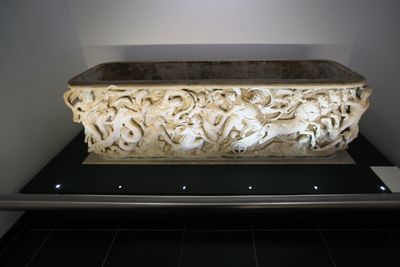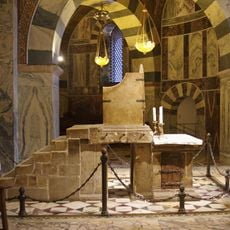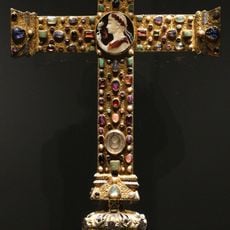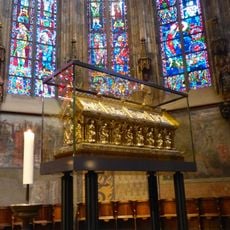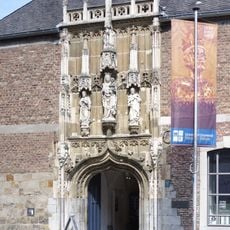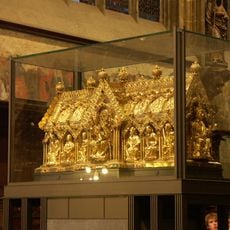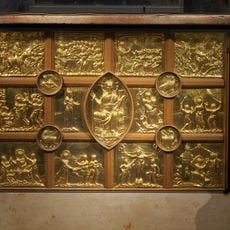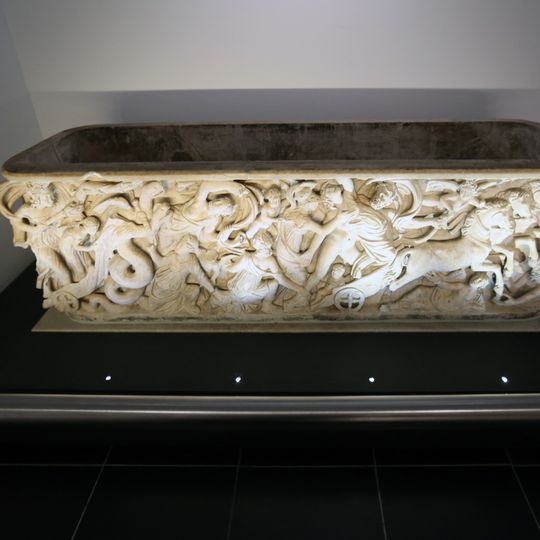
Proserpina sarcophagus, Roman marble sarcophagus in Aachen, Germany.
The Proserpina sarcophagus is a Roman funerary monument crafted from Carrara marble and featuring elaborate relief carvings depicting mythological scenes across its surfaces. The artwork showcases detailed figures and narratives sculpted into the white stone with skilled precision.
This Roman piece was created in the 3rd century and demonstrates the practice of commissioning elaborate marble reliefs for tomb monuments during that era. Its production and preservation reflect Roman craftsmanship and funerary customs of the period.
The sarcophagus portrays Proserpina's abduction by Pluto, a story that represented to Romans the cycle of death and rebirth in their understanding of the afterlife. This mythological scene carried deep meaning for wealthy families who commissioned such tombs.
The monument is located in Aachen and is accessible for viewing by most visitors with relative ease. Examining the carved details closely benefits from taking time to walk around and view it from different angles.
This sarcophagus was crafted from high-quality Carrara marble specifically imported from Italy for this commission. The choice of such an expensive material indicates it was ordered for a wealthy individual who could afford such a costly undertaking.
The community of curious travelers
AroundUs brings together thousands of curated places, local tips, and hidden gems, enriched daily by 90,906 contributors worldwide.