Karlsschrein, Medieval reliquary in Aachen Cathedral, Germany
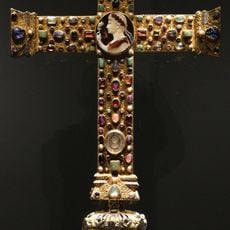
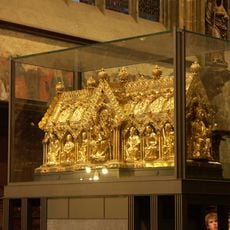
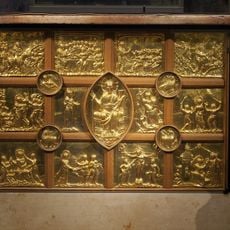
The Karlsschrein is a medieval reliquary in Aachen Cathedral made of gilded silver and copper decorations. The object measures approximately 2 meters in length and about 1 meter in height, with a distinctive rectangular form shaped by intricate metalwork.
Frederick Barbarossa had Charlemagne's remains raised from the Palatine Chapel in 1165 and placed in a sarcophagus beneath the cathedral floor. Frederick II commissioned the shrine, completed in 1215, and personally transferred and sealed the bones on 27 July 1215, two days after his final coronation as King of the Romans in Aachen.
The long sides show sixteen Holy Roman Emperors and Kings, from Henry I and Otto I to Frederick II, while the roof reliefs depict scenes from the legendary life of Charlemagne based on the Pseudo-Turpin chronicle. On the front gable Charlemagne sits between Pope Leo III and Archbishop Turpin, a place otherwise reserved for Christ.
The shrine is accessible during regular cathedral opening hours and is presented as a permanent exhibition. Visitors can examine it from multiple angles to better see the fine details of the metalwork and decorations.
An anthropological examination of the remains in 1874 suggested that Charlemagne was exceptionally tall. This scientific analysis allowed researchers to learn more about the physical characteristics of this historical figure.
The community of curious travelers
AroundUs brings together thousands of curated places, local tips, and hidden gems, enriched daily by 94,936 contributors worldwide.