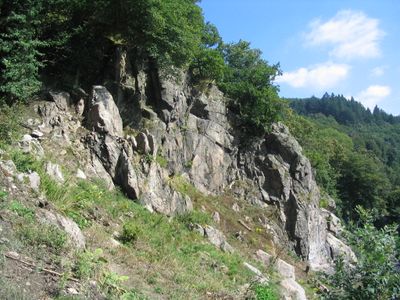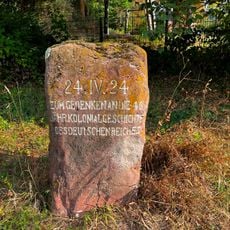
Felsenmeer, Russenstein, Naturpark Michelsbrunnen, Protected rock formation in Naturpark Michelsbrunnen, Germany
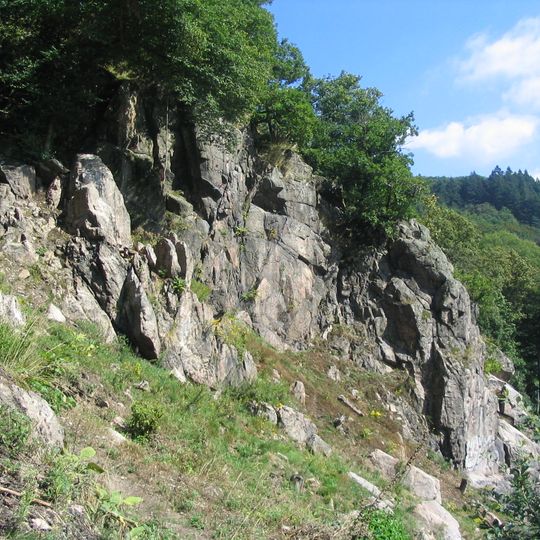
The Felsenmeer is a protected rock formation with extensive granite cliffs and boulder fields located on the northern slope of Königstuhl mountain near Heidelberg. The protected area covers several hectares and features varying elevations, steep slopes, and deep crevices between massive granite blocks.
This rock formation originated during the Ice Age through frost weathering and ice melt, which gradually fragmented the original granite structures. This natural process occurred over thousands of years and created the distinctive landscape visible today.
The Wilckensfels is a granite outcrop within the Russenstein area, named after the Heidelberg granite it is made of rather than after a person. The Russenstein cliffs once held heat-loving plants such as wood anemone and common peony, which vanished as the forest closed in after the Second World War. Clearing work during 2009 rock stabilisation reopened the slopes.
The site has clearly marked walking paths that guide visitors safely through the boulder fields year-round. Rock climbing is prohibited throughout the year, but hikers can easily navigate the stable paths without special equipment.
The Lösswand am Haarlass, a loess exposure within the protected area, is where geoscientist Karl Cäsar von Leonhard took samples in 1824 and thereby introduced the term "Löss" into the geological literature. The word he coined is still used worldwide.
The community of curious travelers
AroundUs brings together thousands of curated places, local tips, and hidden gems, enriched daily by 93,623 contributors worldwide.