Taubenbrunnen, Cultural heritage fountain near Cologne Cathedral, Germany
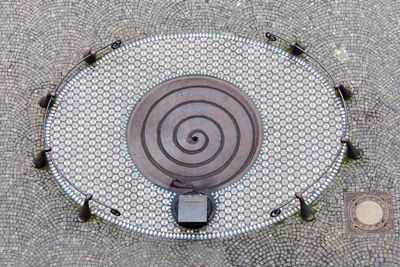
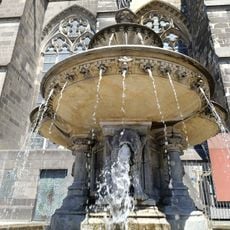
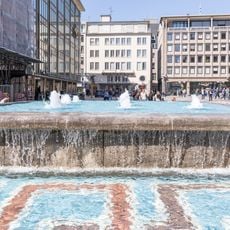
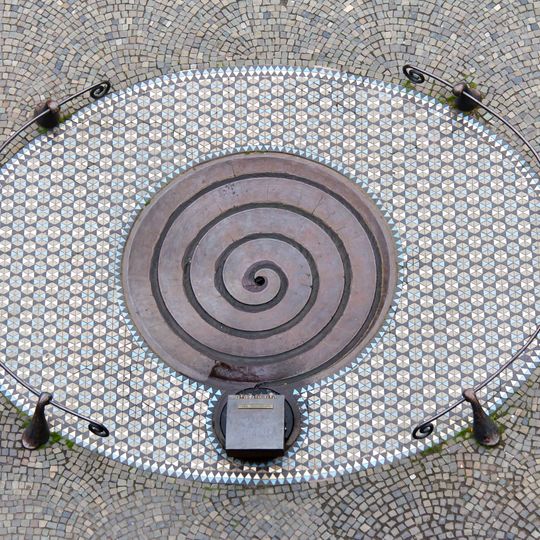
The Taubenbrunnen is a fountain made from basalt, copper, and mosaic in Cologne's old town. The structure features a large oval mosaic field framed by iron bars with a circular trough where water flows through a spiral pattern before draining at the center.
It was built in 1953 as Cologne's first abstract fountain following World War II, designed by sculptor Ewald Mataré. This construction marked an artistic new beginning for the cathedral city after wartime destruction.
The mosaic displays geometric patterns made from small tiles in blue, white, grey, and black that reflect postwar artistic styles of the 1950s. Visitors notice how this tile pattern sets it apart from older fountains throughout the city and embodies the modern aesthetic of that era.
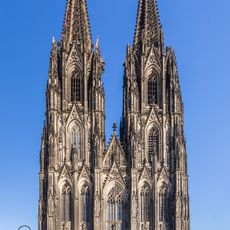
The fountain sits at Kardinal-Höffner-Platz in front of Cologne Cathedral and is easy to reach from the old town center. Water flows continuously through the spiral channel, making any time of day a good moment to visit.
Water emerges from three outlets atop a square basalt block and follows a carefully designed spiral path. This flowing motion creates a calming display that continually draws visitors' attention and reinforces the circular theme visible in the mosaic below.
The community of curious travelers
AroundUs brings together thousands of curated places, local tips, and hidden gems, enriched daily by 91,048 contributors worldwide.