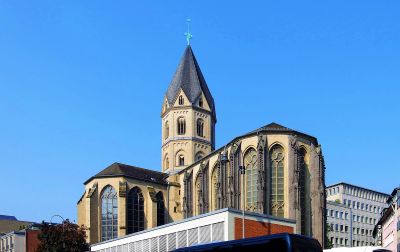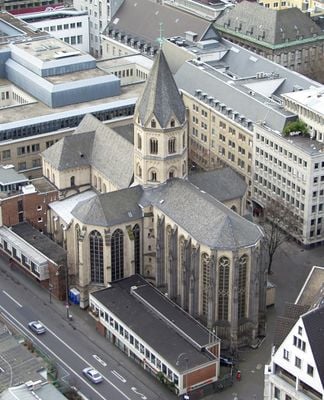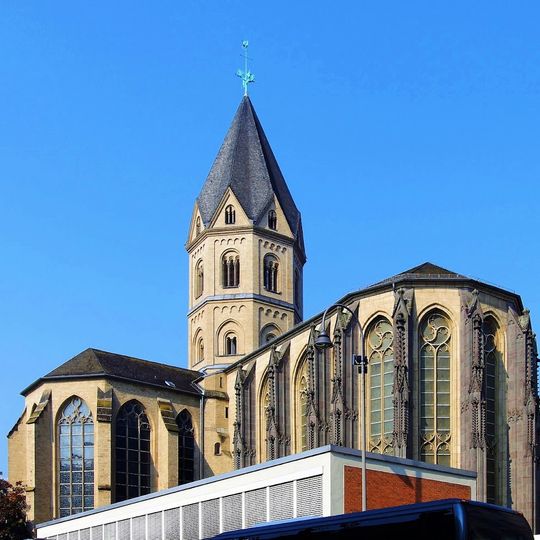
St. Andreas Church, Romanesque and Gothic church in Altstadt-Nord, Germany
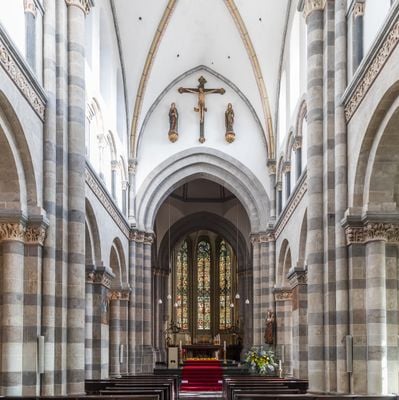
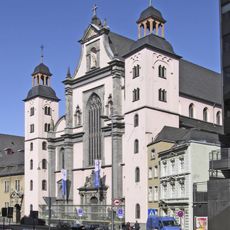
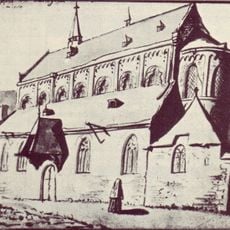
St. Andreas is a three-aisled pillar basilica with a Romanesque crossing tower topped by a steep, dark faceted roof. Its west parts date from the 12th and 13th centuries, while Gothic chapels were added to the side aisles in the 14th century and a Gothic choir hall replaced the Romanesque east choir around 1400. The nave interior has pointed arches and clustered columns of alternating grey and light stone bands.
The church was founded in the late 10th century and went through several phases of rebuilding as new architectural styles were added. It survived destruction and conflict and remains a religious landmark in Cologne.
The church is named after Saint Andrew and has served as a venue for music and prayer for centuries in the old town. Today, regular concerts here draw people from across the city.
The church is open to visitors on most days and offers guided tours that explain the different spaces and artworks inside. It is helpful to arrive early in the day or on weekdays to experience a less crowded visit.
In the crypt, a 3rd-century Roman sarcophagus holds the remains of Albertus Magnus, the 13th-century theologian and natural philosopher. His bones were moved here on 25 November 1954, and Pope John Paul II visited the tomb on 15 November 1980, the 700th anniversary of his death.
The community of curious travelers
AroundUs brings together thousands of curated places, local tips, and hidden gems, enriched daily by 93,465 contributors worldwide.