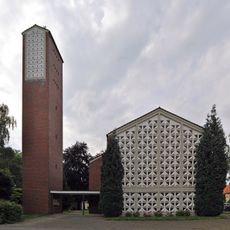
Waldfriedhof Duisburg, Cultural heritage cemetery in Duisburg, Germany
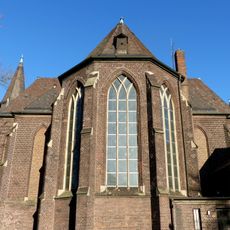
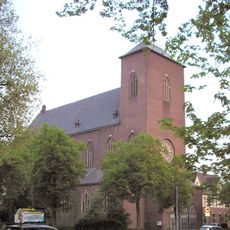
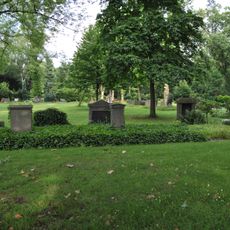
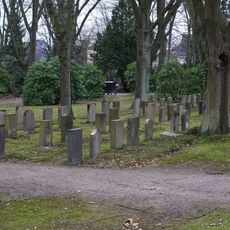
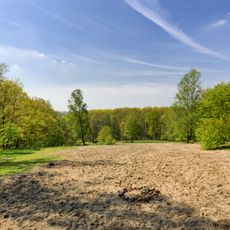
Waldfriedhof Duisburg, also called Neuer Friedhof, lies between Wanheimerort and Buchholz and covers 67 hectares, making it Duisburg's largest cemetery. It was laid out in the early 1920s to plans by architect Herman Bräuhäuser. A network of over 50 km of paths crosses the grounds, which hold some 6000 trees, among them beeches and oaks up to 170 years old. The brick funeral hall and crematorium buildings are under monument protection.
Duisburg's growing population during industrialisation made the Old Cemetery at Sternbuschweg too small, so the city chose a wooded site in today's Wanheimerort owned by the Haniel family. When the family refused to sell, the city began expropriation proceedings, and the New Cemetery was consecrated on 14 June 1923. The oldest surviving gravestone is a boulder with a plaque commemorating a person who died in 1924.
The cemetery is also called Neuer Friedhof (New Cemetery). Its burial fields serve Duisburg's Jewish, Greek Orthodox and Muslim communities, and the Islamic section has existed since the 1990s. The Ehrenfeld in the south, with 3,513 dead from many nations, is a memorial to victims of the Second World War and the 299 Allied air raids on the city.
The main entrance is on Düsseldorfer Straße, where the 2001 crematorium stands; the Ehrenfeld for war victims lies in the southern section, near the Wedauer Straße entrance. The 50 km of paths cross varied terrain, so sturdy shoes help. The Memoriam Garden is reached from the car park entrance and is laid out on curved paths between dry-stone walls and water features.
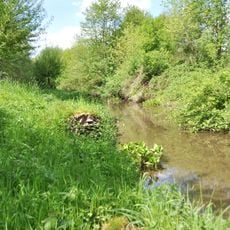
The oldest surviving grave marker is a glacial erratic boulder fitted with a plaque commemorating a person who died in 1924, a year after the cemetery opened. Look for it as the earliest physical trace of the grounds.
The community of curious travelers
AroundUs brings together thousands of curated places, local tips, and hidden gems, enriched daily by 93,875 contributors worldwide.