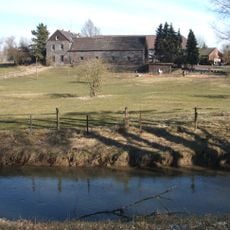
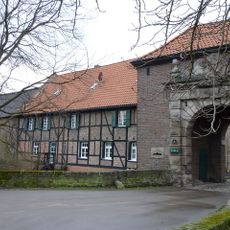
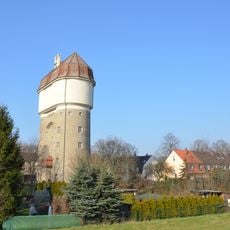
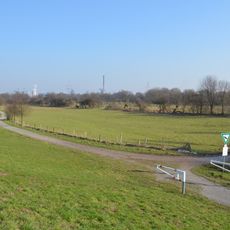
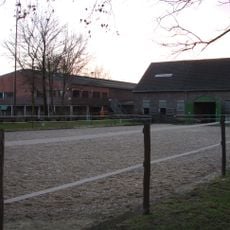
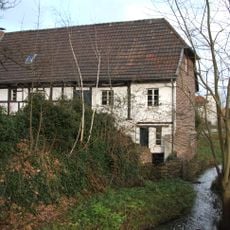
Haus Angerort, Medieval castle ruins in Duisburg, Germany
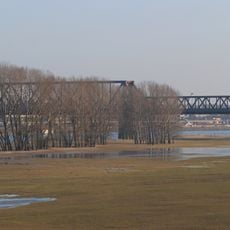
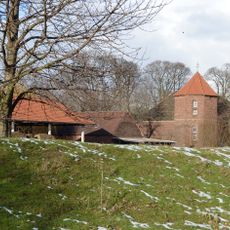
Haus Angerort is a castle site in Duisburg positioned where Angerbach stream joins the Rhine, containing remnants of defensive structures built to protect the waterway. The layout demonstrates how medieval fortifications used water as both moat and transportation barrier.
The first verifiable written mention of Angerort dates from 1409/10, when Duisburg's mayors and Schultheiß met canons from Kaiserswerth there. In 1425 Duke Adolf of Berg ordered the house, on the duchy's northern border, rebuilt as a castle and border fortress against the Duchy of Cleves; the eight offices of Berg raised 60 Reichsgulden yearly for it. In March 1429 the dukes of Jülich-Berg and Cleves met at Duisburg and Angerort to settle mutual claims.
The name combines 'Anger' from Angerbach stream and 'Ort' meaning end point, marking its location where the waterway meets the Rhine. This naming reflects how medieval settlements identified places by their natural surroundings.
Access to this location is restricted since it remains private property requiring advance permission from the owner before any visit. Visitors should be prepared for an outdoor site without facilities and dress appropriately for uneven or muddy ground near the river.
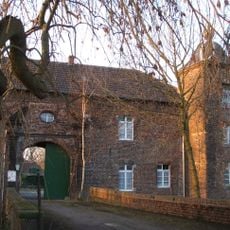
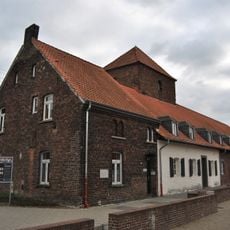
A 1571 sketch by Arnold Mercator shows an irregular castle ringed by walls and buildings, with two large round towers and a smaller tower flanking the entrance. In 1629 troops of the Dutch Republic plundered Angerort and took all its furnishings; during the 1630s imperial occupation the castle was rebuilt as a bastion fortress.
The community of curious travelers
AroundUs brings together thousands of curated places, local tips, and hidden gems, enriched daily by 93,877 contributors worldwide.