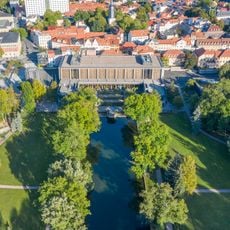
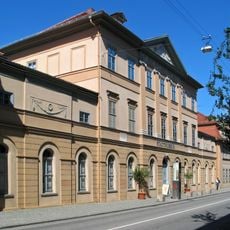
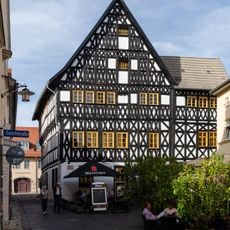
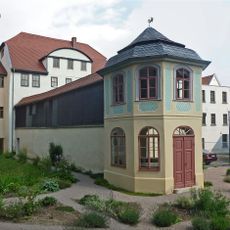
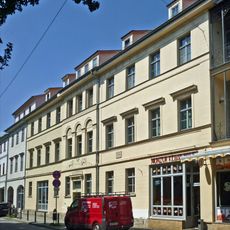
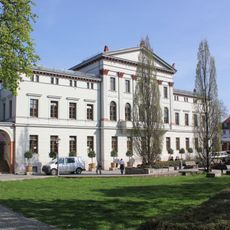
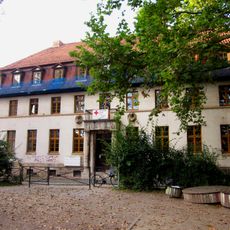
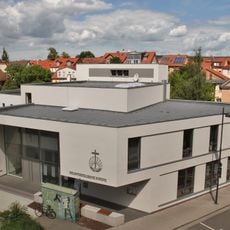
Asbach-Grünzug, Urban green space in Weimar, Germany.
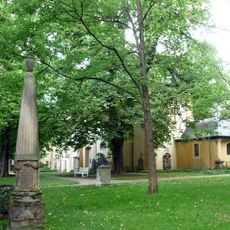
The Asbach-Grünzug is a 16-hectare green belt on the north side of Weimar, bordered by Bechsteinstraße, Müllerhartungstraße, Fuldaer Straße, Florian-Geyer-Straße, Schwanseestraße and Karl-Liebknecht-Straße. Its 1.5-kilometer linden and maple avenue runs along Asbachstraße, and the Vimaria-Stadion, the Schwanseebad opened in 1928 and the Weimarhallenpark lie within the grounds.
The project began in 1917 with designs by Max Vogeler and was realized around 1920 by city architect August Lehrmann. The green belt was created as part of a broader urban development plan to reshape Weimar.
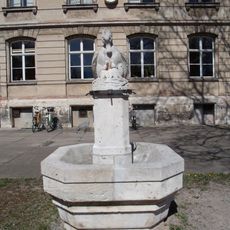
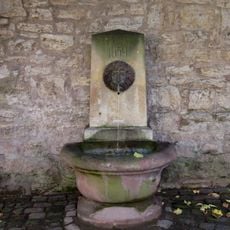
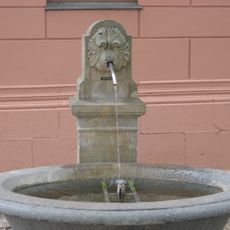
The green space functions as a central gathering point where locals walk, exercise, and spend time with family and friends throughout the year. The pathways and water features connect different neighborhoods and create a shared space for the community to enjoy.
The green belt is bounded by Bechsteinstraße, Müllerhartungstraße and Fuldaer Straße to the north, Florian-Geyer-Straße to the west, Schwanseestraße to the south and Karl-Liebknecht-Straße to the east. The roughly 1.5 km linden and maple avenue along Asbachstraße links the Vimaria-Stadion, the Schwanseebad and the Weimarhallenpark, so plan the walk as a route from one end to the other.
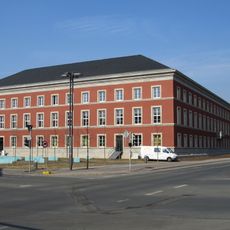
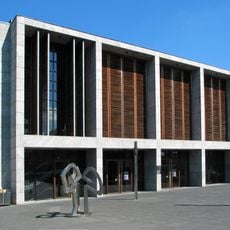
A section of the eastern green belt was demolished for the Gauforum; since 2019 the Bauhaus-Museum has stood on Stéphane-Hessel-Platz in that area. The belt is part of the Quartier Weimarer Moderne and its upkeep is classed as a Nationales Städtebauprojekt.
The community of curious travelers
AroundUs brings together thousands of curated places, local tips, and hidden gems, enriched daily by 92,775 contributors worldwide.