Hengst, Ancient defensive hillfort in Sassnitz, Germany.
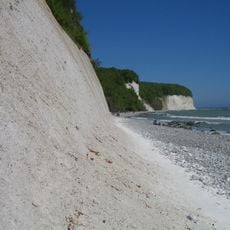
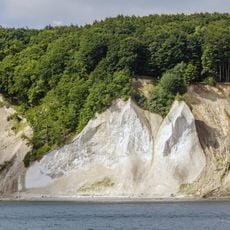
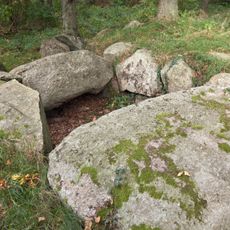
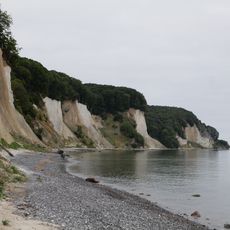
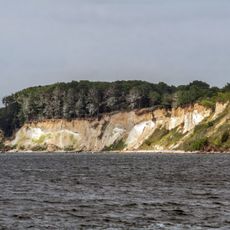
Hengst is a hillfort situated on elevated terrain near Sassnitz on Rügen Island, featuring clearly visible earthen ramparts and ditches that encircle the site. The raised position provides expansive views across the surrounding landscape and toward the Baltic coast.
Grümbke and Haas interpreted the Hengst as a fortified watch-post (castrum speculatorium) overlooking the surrounding waters, while Lisch linked it to the Old Slavic temple site of the god Pizamar mentioned in the Knytlinga Saga. Shards and bones found in 1868 were dated by some to the Stone Age, by others to the Slavic period. Excavations in 1941 uncovered Neolithic decorated pottery, shards of double-coned vessels of the younger Bronze Age and fragments of a bowl with an inset base from the pre-Roman Iron Age.
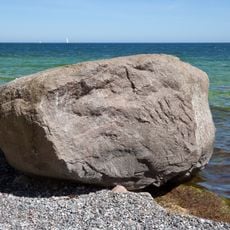
The name Hengst is of unclear origin; Haas links it to the Nord- und Südperd on Mönchgut (Perd meaning horse) and to a rock once called "Hengst" at the north tip of Helgoland, while Schmidt points to Hengest, leader of the Anglo-Saxons in the Beowulf epic. South of the rampart lies the Piratenschlucht, where legend places Störtebeker, who is said to have sailed the Lenzer Bach when it was still navigable.
The coastal path to Stubbenkammer once ran through openings at the north and south ends of the rampart; recent erosion on the south side means the route now passes west around the foot of the wall. A low outer rampart with a ditch in front leads north down from the wall opening to the Lenzer Bach.
The name's origin is unexplained; Haas links it to the North and South Perd on Mönchgut (Perd meaning horse) and to a rock called "Hengst" once at Helgoland's north tip, while Schmidt points to Hengest, leader of the Anglo-Saxons in the Beowulf epic.
The community of curious travelers
AroundUs brings together thousands of curated places, local tips, and hidden gems, enriched daily by 94,529 contributors worldwide.