Jasmund National Park, National park and UNESCO World Heritage Site in Rügen, Germany.
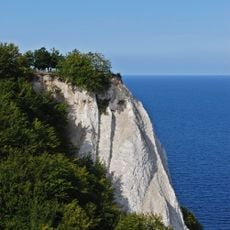
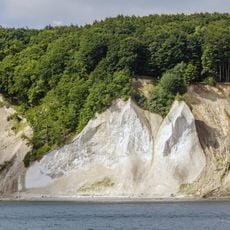
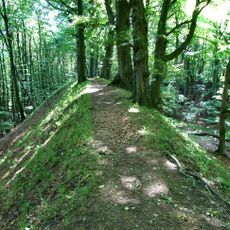
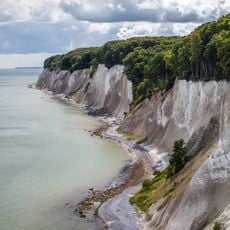
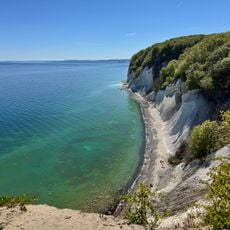
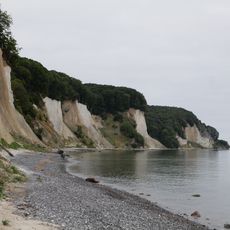
Jasmund National Park covers the Stubnitz ridge on Rügen, with beech forest on the plateau and a 2,200-hectare chalk coast. The cliffs are made of white chalk about 70 million years old, and the Königsstuhl rises 118 metres above the Baltic. The park also includes a 500-metre-wide sea strip and former chalk quarries at Quoltitz.
In 1926, when a disused chalk quarry near Sassnitz was about to reopen, the coast north of the town was designated a nature reserve. On 12 September 1990, the last government of East Germany declared the area a national park under its national park programme, before reunification. In 2011 the beech forest was added to the UNESCO World Heritage List.
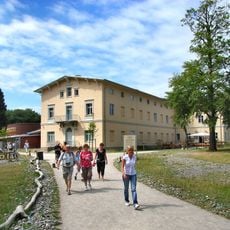
The name Königsstuhl ("King's Chair") comes from a legend that a king once sat on the 118-metre chalk cliff to survey the land. The cliff is the park's most visited point, with about 300,000 people stepping onto its platform each year. Since 2004 the Königsstuhl has been part of the grounds of the Königsstuhl National Park Centre, opened in March that year.
The park is easy to reach and offers multiple hiking trails of varying difficulty that lead to viewpoints. It is best visited in stable weather, as the cliffs can be windy and slippery, and walks along the edges require careful footing and sturdy shoes.
The Wissower Klinken, a chalk outcrop often linked to Caspar David Friedrich's 1818 painting Chalk Cliffs on Rügen, largely collapsed into the Baltic on 24 February 2005. Friedrich's painting actually matches the Kleine Stubbenkammer, as shown in an 1834 steel engraving by Johann Friedrich Rosmäler.
The community of curious travelers
AroundUs brings together thousands of curated places, local tips, and hidden gems, enriched daily by 93,031 contributors worldwide.