Herthaburg, Medieval castle on hill in Sassnitz, Germany
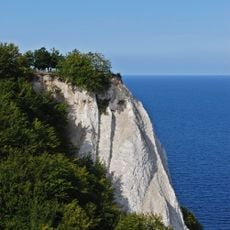
Herthaburg is a medieval castle situated on a hilltop near Sassnitz on the Baltic coast. The ruins sit elevated above the surrounding area and command views toward the sea and the landscape beyond.
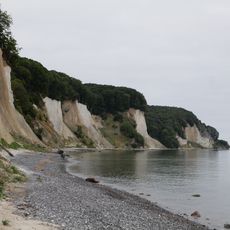
Herthaburg is a Slavic hillfort built between the 8th and 12th centuries on a ridge on the northeast shore of the Herthasee, in the Stubnitz forest of Jasmund National Park on Rügen. Excavations found a stone pavement in the Slavic cultural layer, and pottery sherds from it date the fort's use to the 10th and 11th centuries. Its open south side faced the lake, and access was probably by a bridge across the water; the present entrance was made later.
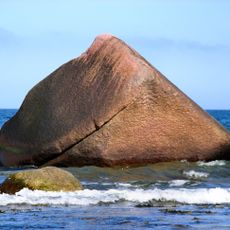
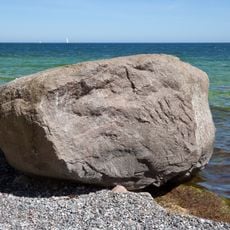
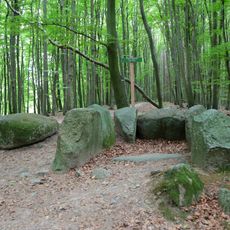
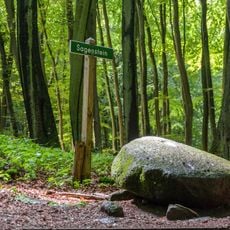
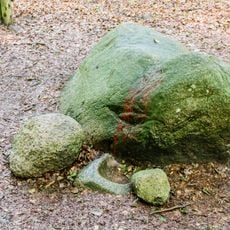
The name Herthaburg links the wall to Hertha, a supposed Germanic goddess who bathed in the adjacent Herthasee; legend says her attendants were killed to keep the ritual secret. Most of these tales took shape in the Romantic period around 1800, when the Willich brothers ran Rügen's first spa at Sagard and laid paths and shore steps through the Stubnitz. Near the wall, the Sagenstein and a trough mill placed on the Opferstein were arranged for walkers heading to the Königsstuhl.
The wall is reached on foot from the Stubbenkammer area; the Königsstuhl path passes the outer rampart, which is clearly visible from it. The inner wall rises 8 m from the inside but up to 17 m from outside, so the climb is short but steep. The open south side borders the Hertha See; the present entrance to the interior was made later than the Slavic-period bridge access.
The rampart is up to 17 m high on the outer northeastern side but only 8 m from inside, and its top lies 136 m above sea level. The open south side borders the Hertha lake, which was probably crossed by a bridge to enter the fort. The later access to the interior came about only afterwards.
The community of curious travelers
AroundUs brings together thousands of curated places, local tips, and hidden gems, enriched daily by 94,631 contributors worldwide.