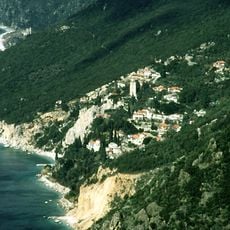
Agiou Pavlou monastery, Orthodox monastery in Mount Athos, Greece
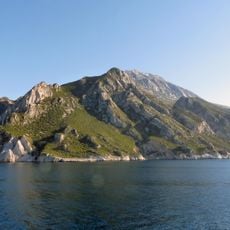
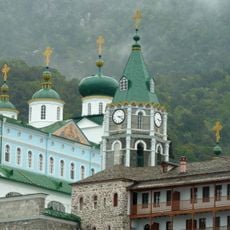
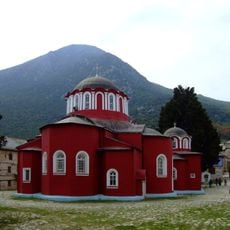
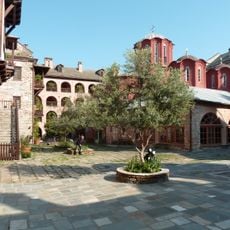
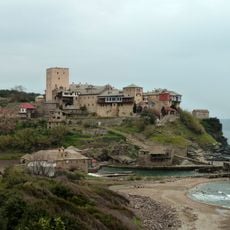
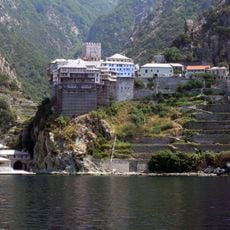
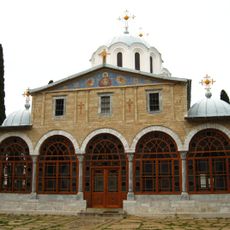
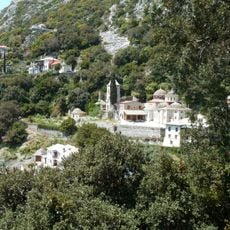
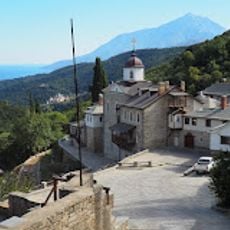
Agiou Pavlou monastery is an Orthodox monastic community on the Athos peninsula in Greece, located on elevated terrain along the western coast and featuring traditional Byzantine architecture combined with fortified walls. The buildings are arranged around courtyards in the classic layout that defines these religious settlements on the mountain.
Founded at the end of the 9th century by Saint Paul of Xeropotamou, son of Emperor Michael I, the monastery was first dedicated to Saint George. It was renamed after Saint Paul in 1108. Destroyed in the early 14th century and reduced to a dependency of Xeropotamou, it was restored as an independent monastery between 1355 and 1365 with support from Serbian nobles Antonije Bagaš and Nikola Radonja. Its present layout, twice the original size, dates from the mid-18th century.
The monastery's name comes from Paul of Xeropotamou, its founder, and its patronal feast is the Presentation of the Lord on 2 (15) February; earlier dedications were to Christ the Saviour, the Virgin and Saint George. The chapel of Saint George in the north wing keeps wall paintings of the Cretan School dated 1554, signed by the painter Antonios. The library holds 494 manuscripts and 12,000 printed books.
The monastery lies about 1.5 km from the coast at roughly 150 m above sea level, on the western slope of Mount Athos, half an hour's walk from Dionysiou monastery. Reaching it means walking, so allow time for the climb. Only men may enter the peninsula, and visitors need the permits required for Mount Athos.
The monastery keeps religious artifacts that are said to be the original gifts from the Three Wise Men to Jesus: gold, frankincense, and myrrh. These relics remain lesser known among visitors despite being among the most precious possessions of the community.
The community of curious travelers
AroundUs brings together thousands of curated places, local tips, and hidden gems, enriched daily by 94,660 contributors worldwide.