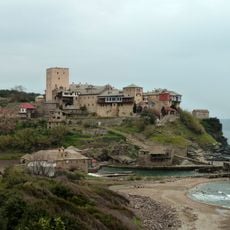
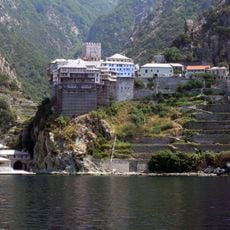
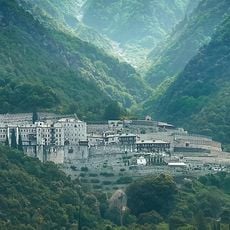
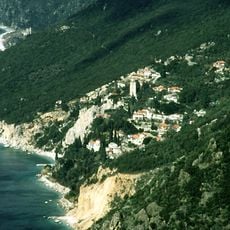
Skete Hagias Triados, Orthodox skete in Mount Athos, Greece.
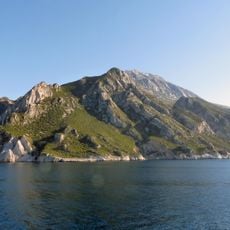
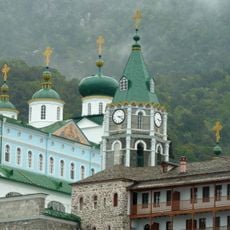
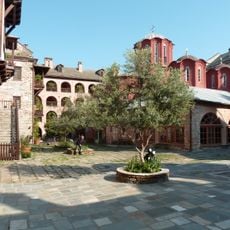
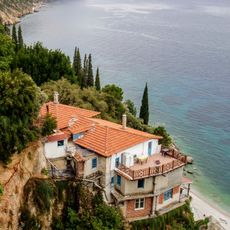
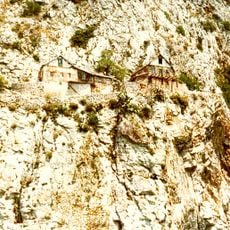
Skete Hagias Triados comprises scattered monastic cells distributed across the Great Lavra territory amid Mediterranean forest and coastal views. Simple stone buildings are linked by forest paths and organized as a loose settlement for contemplative life.
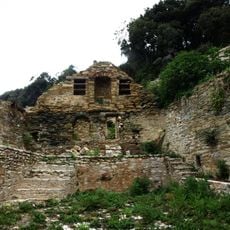
The skete takes its name from Maximos Kausokalybites, a 14th-century hermit who burned his hut each time it was built so he would own nothing. It belongs to the Great Lavra monastery, about four and a half hours away on foot. The settlement grew as a loose cluster of cells; the hut of Saint Akakios the Younger survives from the early 18th century.
Monks here follow strict daily routines centered on prayer, manual labor, and copying religious texts by hand. These practices remain tied to rules established centuries ago within this monastic community.
Visiting requires special permission from Mount Athos authorities, typically arranged through organized pilgrimages rather than independent travel. Spring through autumn offers the most comfortable conditions for walking the forest paths that connect the scattered buildings.
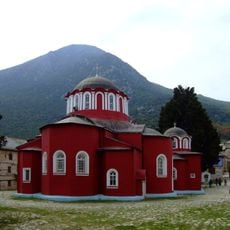
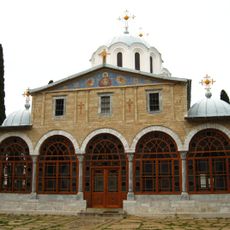
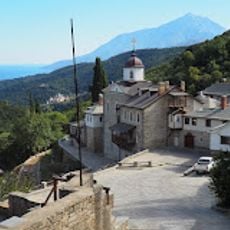
The name comes from Maximos Kausokalybites, a 14th-century hermit who never stayed long in one hut: he burned it and moved on so that he would own nothing. The skete is also called Holy Trinity Skete, and its main church is dedicated to the Holy Trinity.
The community of curious travelers
AroundUs brings together thousands of curated places, local tips, and hidden gems, enriched daily by 93,093 contributors worldwide.