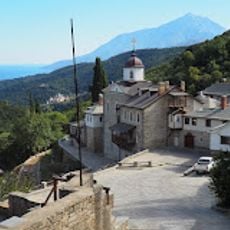
New Skete, Monastic settlement on Mount Athos, Greece.
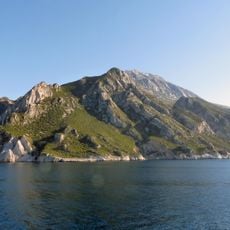
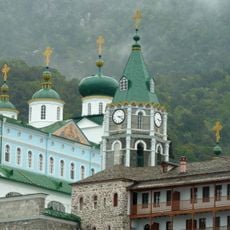
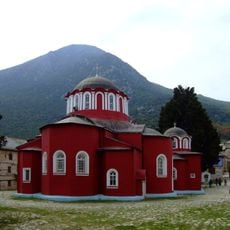
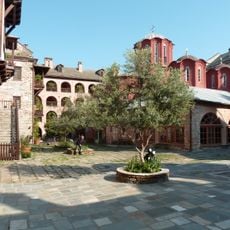
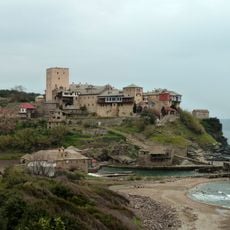
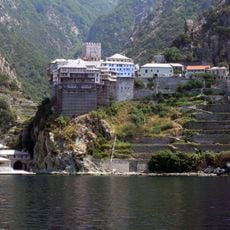
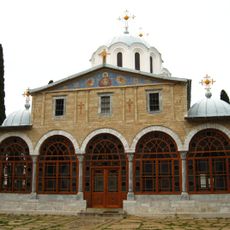
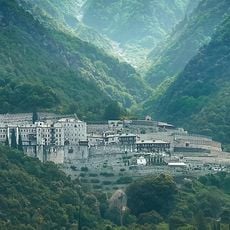
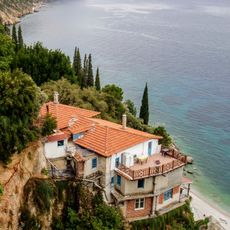
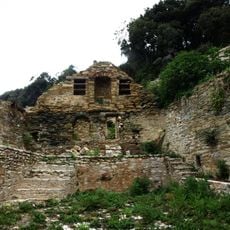
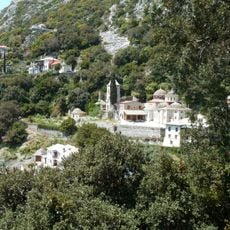
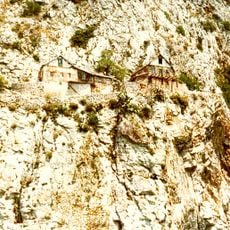
New Skete (Nea Skiti) is a skete of Agiou Pavlou Monastery on the steep, rocky southwestern shore of the Athos peninsula, a 30-minute walk from the monastery and the same from the Skete of Saint Anne. About 40 monastics live in roughly 33 residences, each with a small chapel and a plot of land. Its Katholikon, built in 1760, stands at the southern edge of the settlement beside a cliff above the Aegean.
New Skete was founded on 15 March 1753 at the request of monks already living there, under the name of Saint Benedict or Holy Cross, and was later slightly relocated and renamed; some documents call it the Skete of Pyrgos. Its katholikon was begun in 1730 and finished in 1757 with donations from Ioannina, and was dedicated to the Nativity of the Theotokos. In 1953 Saint Joseph the Hesychast moved here with his brotherhood and lived in a cell until his repose in 1959.
The skete follows the idiorrhythmic way of monastic life, with about 40 monks living in roughly 30 kalyves, each hut with its own small shrine and plot. Monks support themselves by painting icons, carving wood, working as goldsmiths and growing fruit, especially citrus. The community speaks Greek and belongs administratively to the Skete of Saint Anne.
Male visitors must obtain a special permit called a diamonitirion before entering, with strict limits on daily guest numbers. Advance planning is necessary as capacity is restricted and spots fill quickly.
The original tomb of Saint Joseph the Hesychast, who moved to New Skete with his brotherhood in 1953 and died there in 1959, still stands in his chapel, in the holy chapel of the Annunciation of the Virgin Mary. His relics were later exhumed and distributed to monasteries, but the grave remains a pilgrimage site for Orthodox Christians.
The community of curious travelers
AroundUs brings together thousands of curated places, local tips, and hidden gems, enriched daily by 93,794 contributors worldwide.