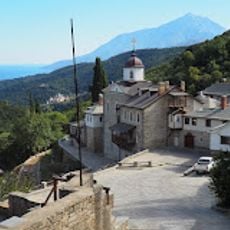
Esphigmenou Monastery, Orthodox monastery on Mount Athos, Greece
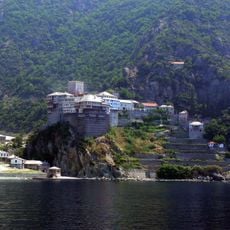
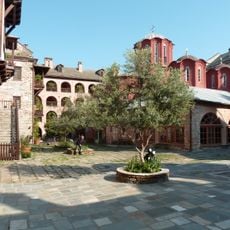
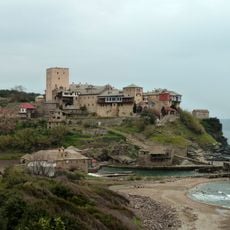
Esphigmenou Monastery is an Orthodox monastery on the eastern coast of Mount Athos in Greece, facing the sea and surrounded by thick stone walls. The courtyard opens around a main church, and the monks' cells are arranged along the inner walls on several floors.
Tradition, unsupported by documents later shown to be forged, attributes its founding to Empress Pulcheria in the 5th century; the first certain testimonies date to the late 10th and early 11th century, and the 1045/46 Typikon of Athos lists it fifth. It was damaged by subsidence that year and raided by pirates in 1047, then rebuilt. Serbian King Stefan Dušan and Emperor John VIII Palaiologos were among later donors.
The monastery celebrates the Ascension, forty days after Easter, and its catholicon is dedicated to the Ascension of Christ. The name Esphigmenou, meaning "tightened," is linked in tradition to a monk who wore a tight rope around his waist. Since 1972 the resident brotherhood has not commemorated the Patriarch of Constantinople, and since 2002 it has been officially declared schismatic.
Access follows the general rules of Mount Athos, with permission granted only to male visitors and prior registration at the pilgrimage office. The grounds sit right by the water, so hikers can use the coastal path that connects the individual monasteries.
The monastery's library holds 372 manuscripts, 75 of them on parchment, plus 8,000 printed books. Its sacristy keeps two pieces of Napoleon Bonaparte's tent, a gift from Patriarch Gregory V. A mosaic icon of Christ from the 7th century and a cross attributed to Pulcheria are also kept there.
The community of curious travelers
AroundUs brings together thousands of curated places, local tips, and hidden gems, enriched daily by 93,269 contributors worldwide.