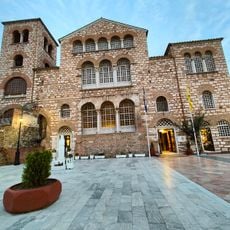
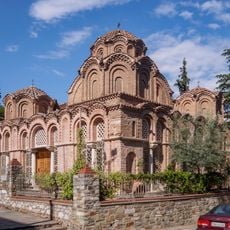
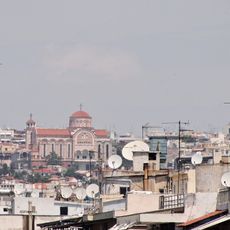
Church of the Holy Twelve Apostles, Byzantine church near Western Walls in Thessaloniki, Greece.
The Church of the Holy Apostles is a five-domed cross-in-square church with four columns, a narthex with a U-shaped peristoon and two small side-chapels to the east. Its exterior walls are decorated with varied brick patterns. It stands at the start of Olympou Street, near Thessaloniki's western medieval walls.
Founded by Nephon I, Patriarch of Constantinople, whose monogram appears above the entrance, the church was probably built around 1329 as the katholikon of a monastery, perhaps dedicated to the Theotokos. In about 1520–1530 the Ottomans turned it into the Soğuksu Mosque, plastering over the mosaics after removing their gold tesserae and adding a minaret. It was reconsecrated in 1912, and restoration of the frescoes began in 1926.
The mosaics depict Christ Pantocrator and prophets in the dome, evangelists in the pendentives, the Twelve Great Feasts on the arches and west wall, and martyr saints. They are the last examples of Byzantine mosaics in Thessaloniki. Frescoes on the lower levels and narthex show Constantinopolitan influence, possibly by the workshop that decorated the Chora Church.
The church stands at the start of Olympou Street, near the western medieval walls. A column remnant lies to the south and a cistern to the northwest, remains of the original monastery complex. The interior is small and the mosaics sit high in the vaults, so bring binoculars or ask about opening hours before visiting.
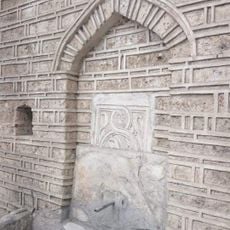
The building uses cloisonné masonry, a technique combining cut stone and brick in patterns similar to Constantinople's architecture. This craftsmanship reflects the influence of the empire's capital on regional building methods.
The community of curious travelers
AroundUs brings together thousands of curated places, local tips, and hidden gems, enriched daily by 93,467 contributors worldwide.