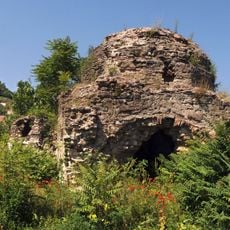
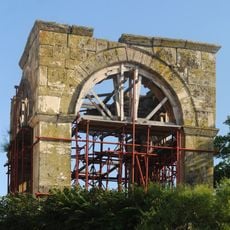
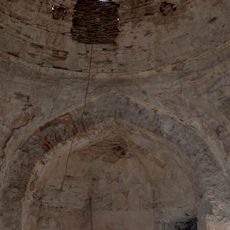
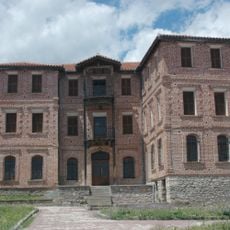
Çelebi Sultan Mehmed Mosque, Ottoman mosque in Didymoteicho, Greece.
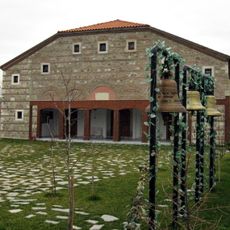
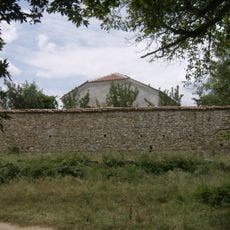
Çelebi Sultan Mehmed Mosque is a square building about 30 metres on each side, with walls 2.2 to 2.7 metres thick of cast stone faced with limestone ashlar. Its main entrance is on the south side, with secondary doors east and west, and two rows of windows. A lead-covered wooden roof in the shape of a four-sided pyramid tops the structure, with a 17th-century veneered wooden cupola suspended inside.
Construction began under Sultan Bayezid I in 1389, paused after his death, then resumed under Sultan Mehmed I until completion in March 1420. This multi-decade timeline reflects the building's importance to Ottoman expansion into the European peninsula.
The mosque's names link it to Sultan Mehmed I, who completed it in 1420, and to Bayezid I, who began it; locals also call it the Great Mosque. The mihrab on the south wall carries a fresco of a heavenly city, an unusual figurative image in a Muslim prayer hall. Other walls bear Quranic verses and invocations in calligraphy.
The building stands in central Didymoteicho within walking distance of the town center and is undergoing restoration work following a 2017 fire. Access conditions may change depending on the pace of repairs, so it is worth checking locally before visiting.
The interior is divided by four square piers into a central prayer square and four elongated spaces around it, so the prayer hall is not column-free. The oak roof, described by A. Bakirtzis as one of the most important wooden monuments in the world, has a Seljuk-style pyramidal form rather than domes.
The community of curious travelers
AroundUs brings together thousands of curated places, local tips, and hidden gems, enriched daily by 94,405 contributors worldwide.