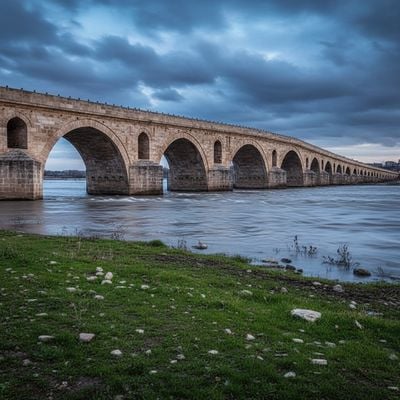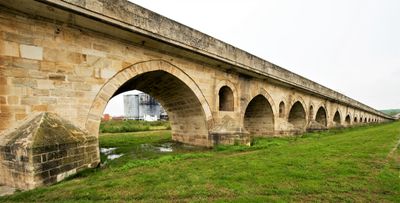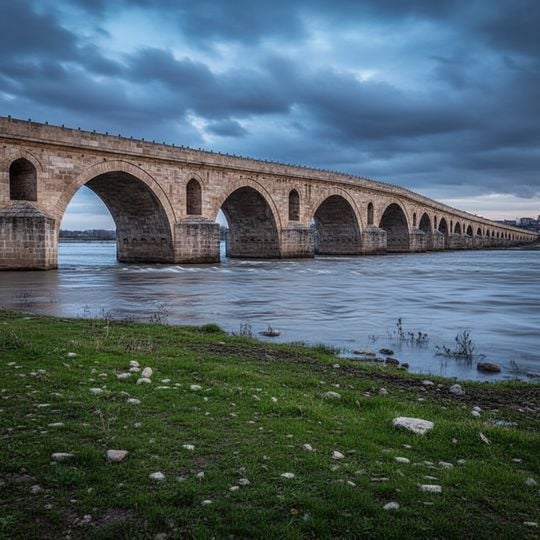
Uzunköprü Bridge, Ottoman stone arch bridge in Edirne Province, Turkey.
Uzunköprü Bridge is an Ottoman stone arch bridge over the Ergene River in Edirne Province, Turkey, running about 1392 meters long and resting on 174 limestone arches. The entire structure is built from limestone joined with traditional Khorasan mortar and still allows crossing on foot today.
Sultan Murad II had the bridge built between 1427 and 1443 to replace a deteriorating wooden crossing and secure key trade routes. The project became one of the most important infrastructure efforts of the early Ottoman period in this region.
The bridge carries carved stone reliefs showing lions and elephants, pointing to artistic traditions from different periods. Visitors who cross on foot can look at these details up close and notice how the stonecutters worked symbolic images directly into the masonry.
The bridge can be crossed on foot, but the uneven stone surface can get slippery when wet, so sturdy footwear is a good idea. Coming in the early morning or late afternoon usually means fewer people and better light for a longer walk.
The name Uzunköprü means simply "long bridge" in Turkish, which is exactly what you see when you first look at it. All 174 arches were built without machines, using only the craft skills and calculation methods of medieval builders.
The community of curious travelers
AroundUs brings together thousands of curated places, local tips, and hidden gems, enriched daily by 91,467 contributors worldwide.