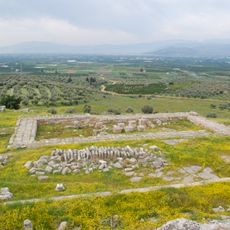
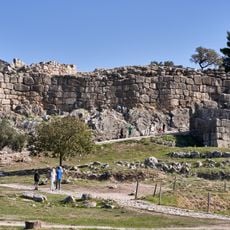
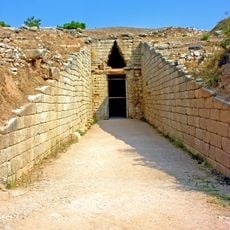
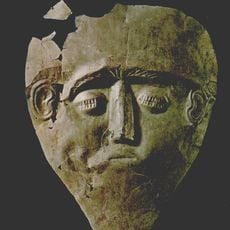
Grave stelai from Grave Circle A, Mycenae, Funerary stone markers in Grave Circle A at Mycenae, Greece
The grave stelai from Grave Circle A at Mycenae are upright rectangular slabs of oolithic limestone, most surviving in fragments, carved in raised relief with spirals, circles, chariot scenes, horses and armed figures. At least 21 stelai were found among the six shaft graves, 12 with identifiable relief. One stele, NAMA Π1428, is 1.65 m high, 1.17 m wide at the base and 14 cm thick.
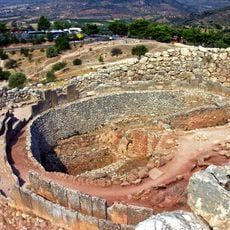
The stelai were set up over the six shaft graves of Grave Circle A between 1600 and 1500 BCE. The opulent grave goods found in those graves are cited by scholars as evidence that the stelai served as status symbols with heroic imagery. John G. Younger argued that the 21 stelai do not mark individual burials but represent the collective of bodies buried in the circle.
The carved stones show scenes from Mycenaean life, especially chariots and hunting, that reflect the status and power of those buried here. These images reveal what mattered to this society and how they saw themselves.
The stelai are located within the excavation site and can be viewed during opening hours, often displayed alongside other finds from the burial circle. Reading a bit about Mycenaean culture beforehand helps you understand the relief scenes better.
The exact meaning of the different relief scenes is still researched and debated by scholars today. What is shown on the stones continues to help researchers understand Mycenaean warfare and daily life.
The community of curious travelers
AroundUs brings together thousands of curated places, local tips, and hidden gems, enriched daily by 93,768 contributors worldwide.