Grave Circle A, Mycenae, Bronze Age burial site in Mycenae, Greece
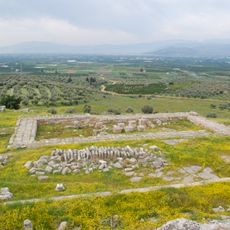
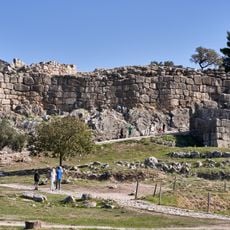
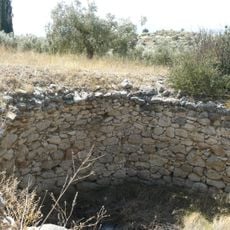
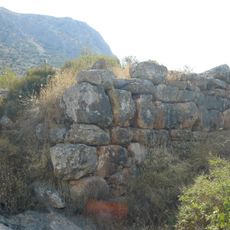
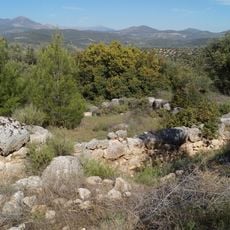
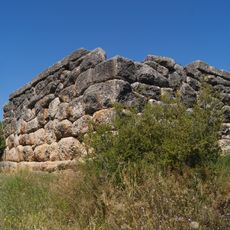
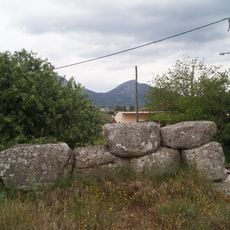
Grave Circle A is a circular royal cemetery on the acropolis of Mycenae, 27.5 m in diameter, with a double ring of upright stone slabs enclosing six shaft graves cut into the bedrock. The largest shaft measures 4.5 by 6.4 m and reaches 4 m deep. The inner face of the peribolos wall is built from medium-sized blocks, and the ground inside is reddish earth with loose stones and sparse grass.
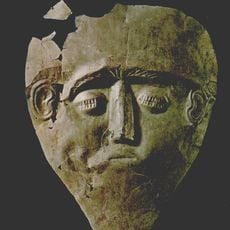
Heinrich Schliemann excavated the site in 1876 and found numerous gold objects and masks from the 16th century before our era. The burials took place over several generations before the citadel expanded in the 13th century before our era, enclosing the cemetery within the new walls.
The circular enclosure with upright slabs shows how the community buried its leaders, honoring them with jewelry, weapons, and gilded face coverings. Visitors today can still see the structure of the shaft tombs where the deceased rested with their belongings.
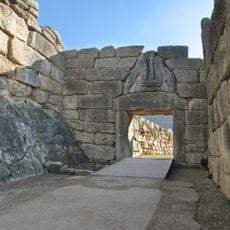
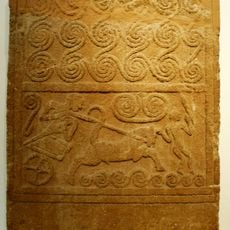
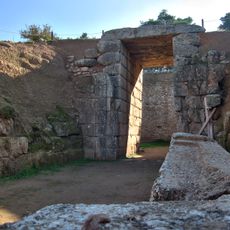
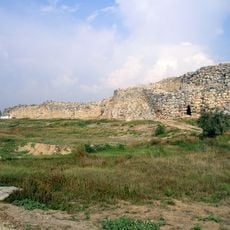
The circle lies just inside the Lion Gate, reached by the uphill path through the citadel; the ground inside is uneven reddish earth strewn with loose stones, so watch your footing. The double ring of slabs is low and can be viewed from the surrounding path without steps. Most of the stelae and grave goods are now in the National Archaeological Museum in Athens.
The excavation yielded more than 15 kilograms (33 pounds) of gold, including a mask that Schliemann mistakenly attributed to Agamemnon. The double stone rings were built only after the burials to mark the spot for future generations.
The community of curious travelers
AroundUs brings together thousands of curated places, local tips, and hidden gems, enriched daily by 92,892 contributors worldwide.