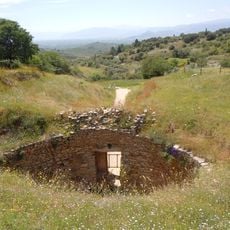
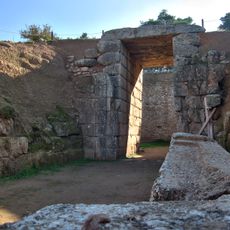
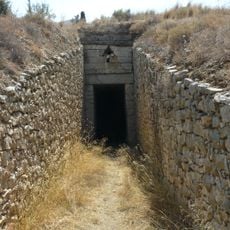
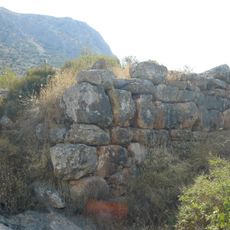
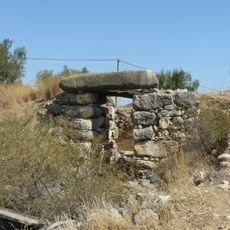
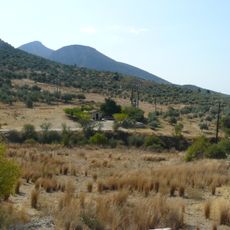
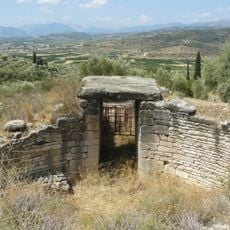
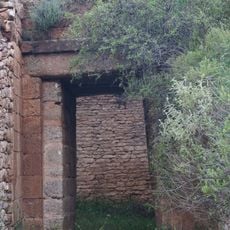
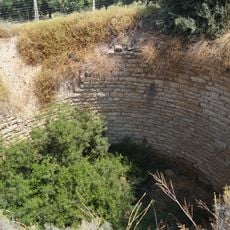
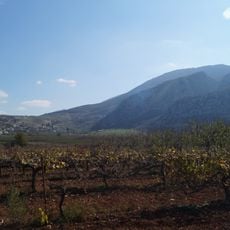
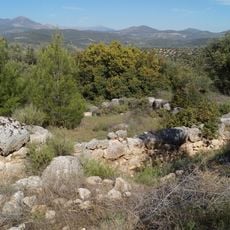
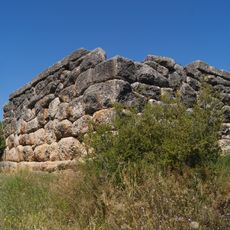
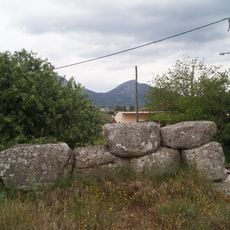
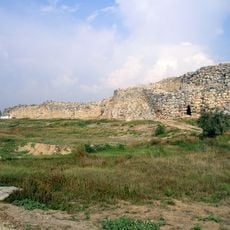
Underground Cistern of Mycenae, Underground water reservoir in Mycenae, Greece.
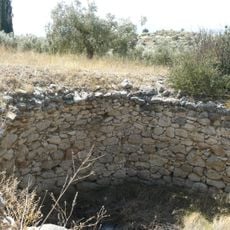
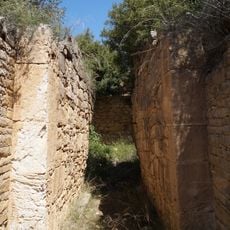
The Underground Cistern of Mycenae lies at the north end of the citadel, reached by a stepped corridor cut into the rock and lined with conglomerate masonry. About ninety steps descend in several flights to a rectangular chamber hewn from the bedrock, its walls coated with waterproof plaster. A clay pipe once fed the basin from a spring on the hillside above.
The cistern was built in the 13th century BCE as part of Mycenae's defensive works. A natural spring outside the fortress walls fed it through a channel cut in the rock, so the citadel had water when besieged. The stepped descent of about 90 steps linked the acropolis to the spring.
The cistern's Greek name, "Υπόγεια Δεξαμενή," simply means "underground reservoir," a modern label for a structure the Mycenaeans called by no surviving name. Visitors descend the same 90-odd steps once used to carry water up in clay vessels, and can see the smoothed walls where ropes and containers wore the stone.
A visit requires a flashlight or headlamp since the staircase and underground chamber are quite dark. The underground air is cool and the steps can be slippery, so sturdy footwear is recommended.
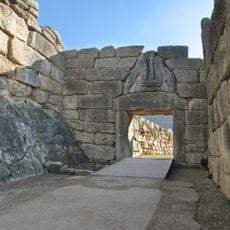
The cistern lies at the end of a concealed stairway cut through the rock, reached from inside the citadel near the north wall. Its position let the defenders draw water without passing through the Lion Gate, a detail easy to miss when walking down from the palace.
The community of curious travelers
AroundUs brings together thousands of curated places, local tips, and hidden gems, enriched daily by 93,023 contributors worldwide.