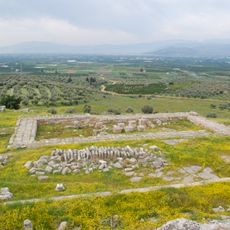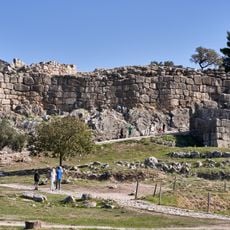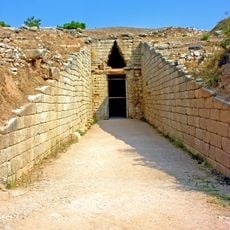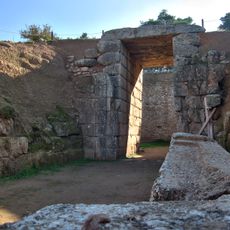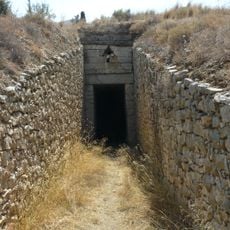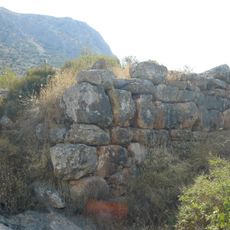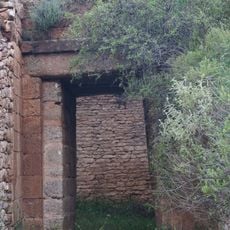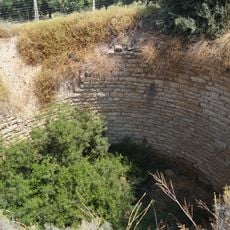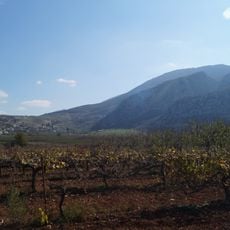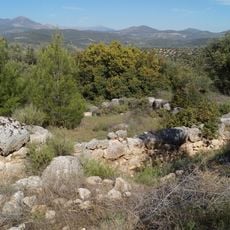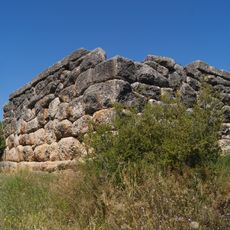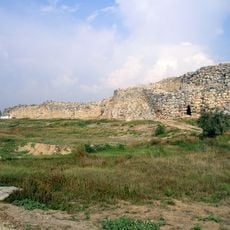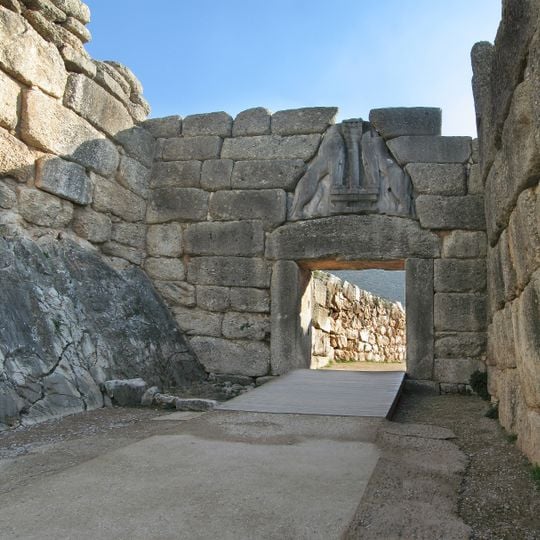
Lion Gate, Bronze Age entrance gate in Mycenae, Greece.
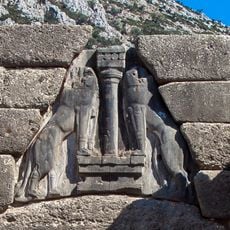
The Lion Gate is the main entrance of the Bronze Age citadel of Mycenae, built around 1250 BC. Its opening, 3.10 m wide and 2.95 m high at the threshold, is framed by four conglomerate monoliths weighing 15–20 tonnes each. Above the lintel, a limestone slab carved in high relief shows two confronted lionesses flanking a Minoan-type column; their separately made heads are missing.
Built during the late Bronze Age when Mycenae dominated the Aegean region, the gate was part of a fortification expansion designed to protect royal tombs and the city.
The name comes from the two felines above the lintel, long called lions though their tufted tails mark them as lionesses. Their heads, made separately, are lost. The column between them is Minoan in type, and the motif repeats a goddess flanked by lions seen on a Knossos pithos. Pausanias described the relief in the 2nd century AD.
The archaeological site operates from May to late autumn, with access requiring an entrance ticket, and visitors should expect uneven terrain along the cobbled paths leading to the gate.
The heads of the two lionesses were carved from separate pieces and are lost; only their necks remain. Because the heads were made of a different material and faced those approaching below, some scholars argue the figures were composite beasts, possibly sphinxes in a Middle Eastern tradition.
The community of curious travelers
AroundUs brings together thousands of curated places, local tips, and hidden gems, enriched daily by 94,043 contributors worldwide.