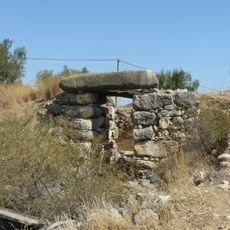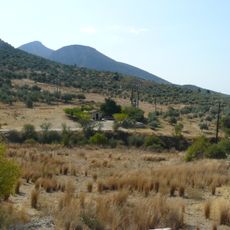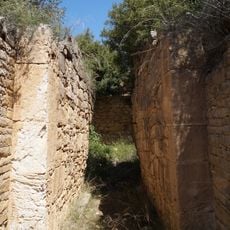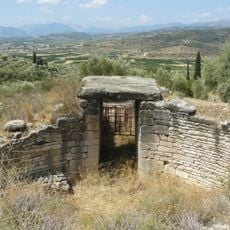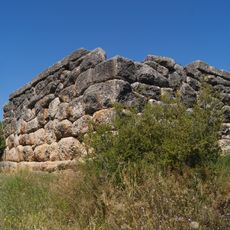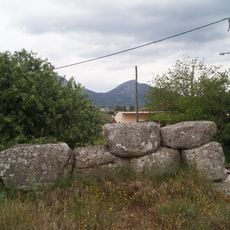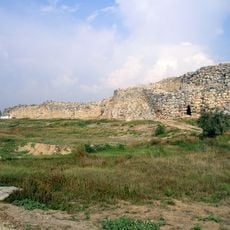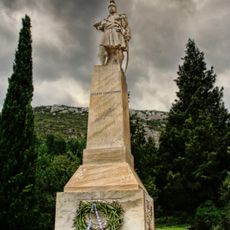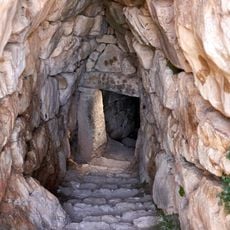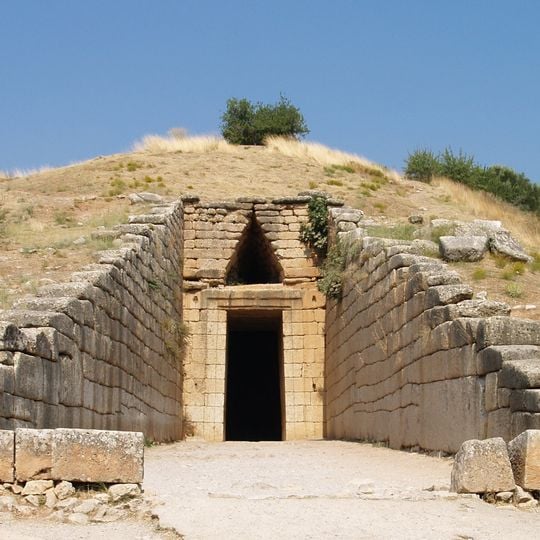
Treasury of Atreus, Tholos tomb in Mycenae, Greece
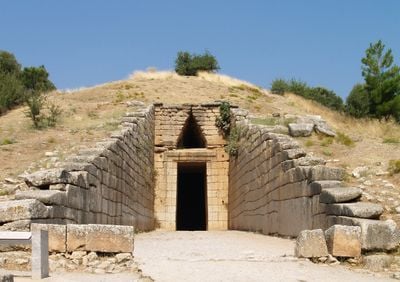
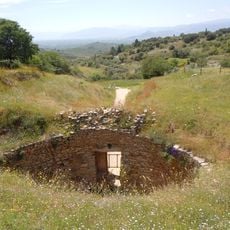
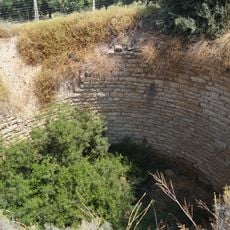
The Treasury of Atreus is a beehive tomb in Argos-Mykines Municipality, Greece, and ranks among the largest structures of this type from the Bronze Age. The inner chamber has a circular form built with layers of cut stone blocks tilted inward to create a vaulted ceiling.
Built between 1300 and 1250 BCE, the tomb is the largest and most elaborate Mycenaean tholos known and one of the last raised in the Argolid. It was visible in Antiquity: Pausanias saw it in the 2nd century CE but placed the graves of Atreus and Agamemnon inside Mycenae's walls. In 1700 the Venetian engineer Francesco Vandeyk identified it, and Claude-Louis Fourmont used the name 'Tomb of Atreus' in 1729–1730. Excavated by Schliemann and then Panagiotis Stamatakis in the 1870s, it was further explored by Alan Wace for the British School at Athens.
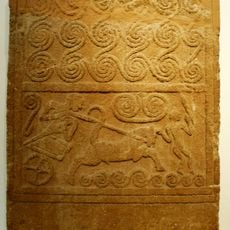
The name "Treasury of Atreus" is modern, probably coined in the 18th century; Pausanias, visiting in the 2nd century CE, did not link the tomb to Atreus or Agamemnon. Before 19th-century excavations, locals took the dome for a giant bread oven. Two gypsum relief fragments showing bulls, now in the British Museum, may come from the side chamber.
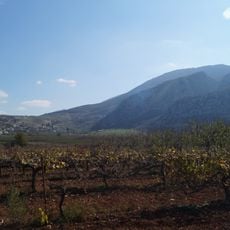
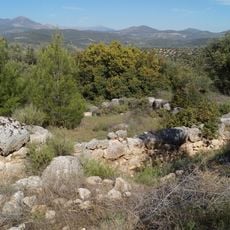
The tomb sits outside the walls of Mycenae and remains open year-round, though sturdy footwear is recommended due to uneven ground. The interior stays cool and provides shelter from the sun, offering relief even on hot days.
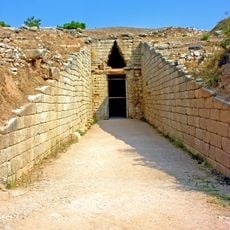
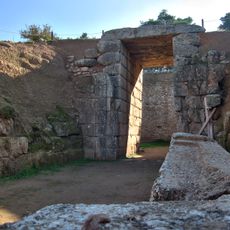
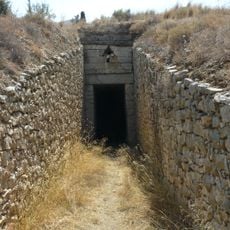
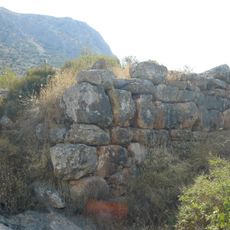
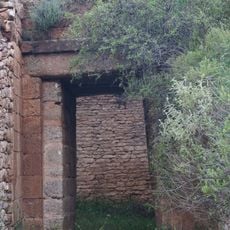
The entrance doorway is spanned by a colossal stone lintel that ranks among the heaviest building elements ever used in prehistoric times. Those who look closely can still spot traces of the tools used to shape the blocks along the walls.
The community of curious travelers
AroundUs brings together thousands of curated places, local tips, and hidden gems, enriched daily by 93,242 contributors worldwide.