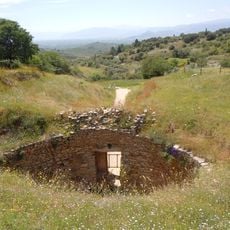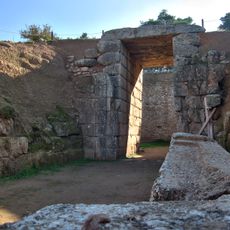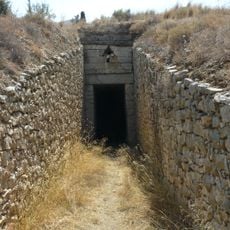
Argive Heraion, Ancient religious sanctuary in Argos-Mykines Municipality, Greece
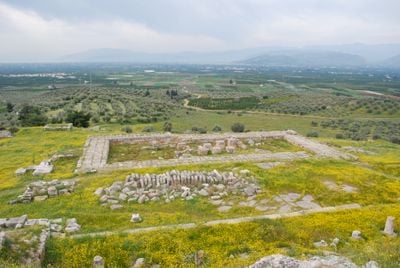
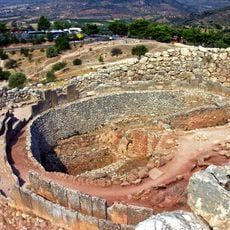
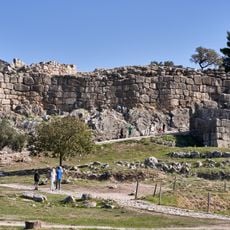
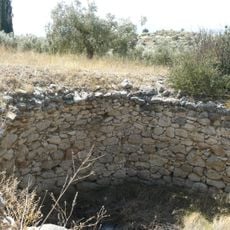
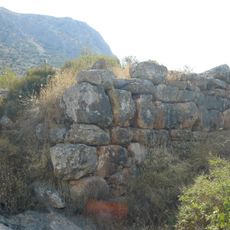
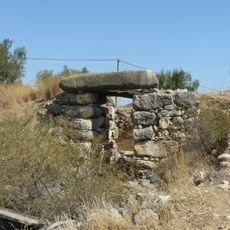
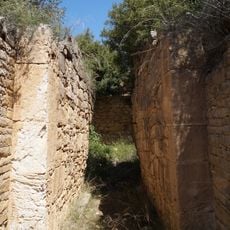
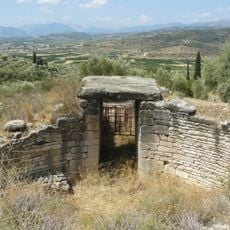
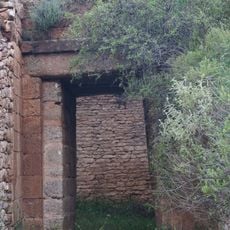
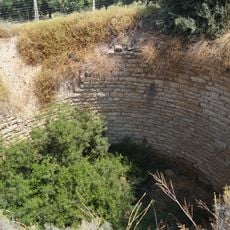
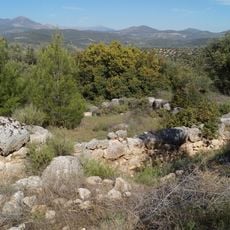
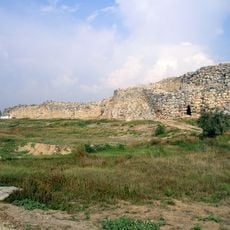
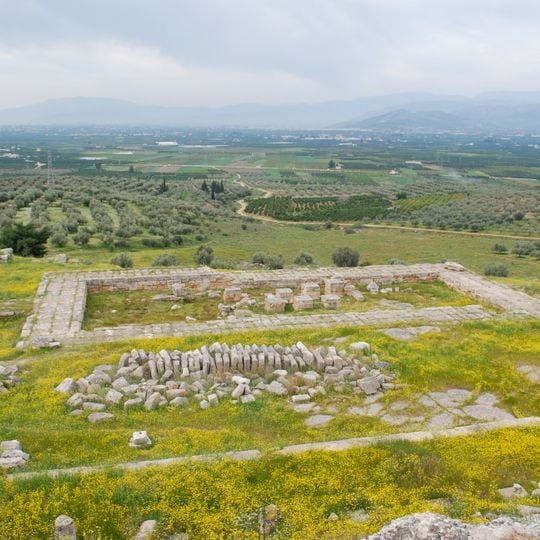
The Argive Heraion lies on the lower hills below Mount Euboea, about five miles from Argos. Its temenos occupies three artificial terraces: the upper holds the Old Temple and an open-air altar, the middle the New Temple built by Eupolemus of Argos, and the lower the ruins of a stoa. The Old Temple Terrace, 55.80 by 34.40 m, was built of large stones imitating Mycenaean Cyclopean masonry.
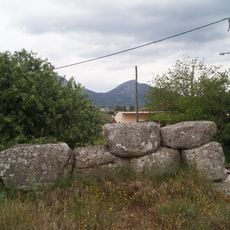
The sanctuary was founded in the 8th century BCE, when Argos built the Old Temple Terrace, a 55.80 by 34.40 m platform of large stones imitating Mycenaean Cyclopean masonry. It served as a shared place of worship for the communities of the Argive Plain until 460 BCE. The Old Temple burned in 423 BCE, and Eupolemus of Argos built the New Temple on the middle terrace, which held Polyclitus's gold-and-ivory statue of Hera.
Pausanias, visiting in the 2nd century CE, called the district Prosymna. The sanctuary drew worshippers from Mycenae, Midea and Tiryns, who came along trails across the Argive Plain for worship and sacred games. The river Eleutherion nearby supplied water for cleansing rituals and sacrifices.
Access involves walking paths with varying slopes that lead to the different terraces, so sturdy shoes are recommended. Visitors should bring water and sun protection, as the site offers little shade during summer afternoons.
The gold-and-ivory statue of Hera in the New Temple is attributed by ancient literature to Polyclitus. Excavator Charles Waldstein found a group of iron oboloi of identical weight and length, likely standard weights and measures from which the obol, worth a sixth of a drachma, took its meaning.
The community of curious travelers
AroundUs brings together thousands of curated places, local tips, and hidden gems, enriched daily by 92,877 contributors worldwide.