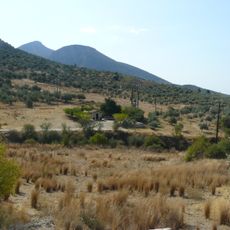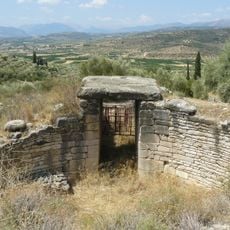
Tomb of Clytemnestra, Ancient tomb at Mykines, Greece
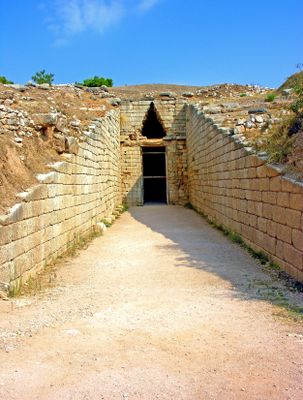
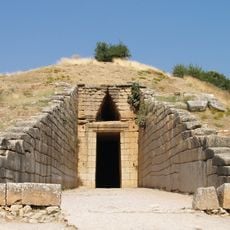
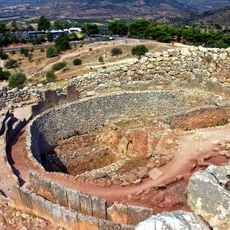
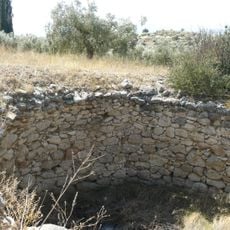
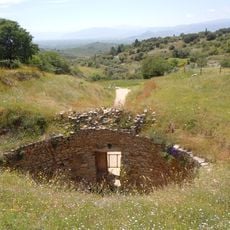
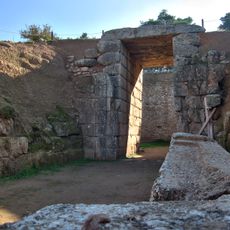
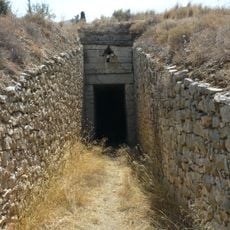
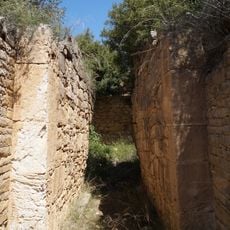
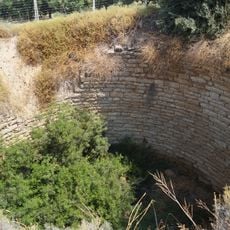
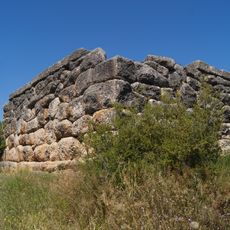
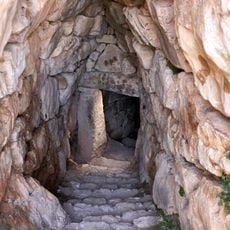
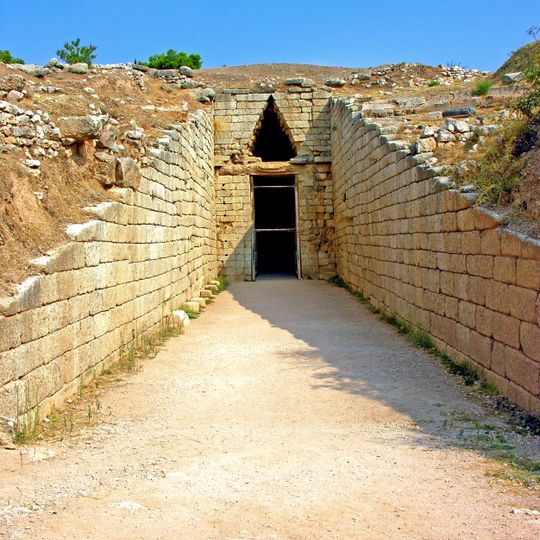
The Tomb of Clytemnestra is a Bronze Age tholos tomb near Mycenae in Greece, built with a long stone entrance corridor called a dromos and a circular burial chamber topped by a corbelled dome. The walls of the chamber are made of carefully laid stone courses that gradually lean inward to form the roof, without any mortar holding them together.
The tomb was built around 1250 BCE, making it one of the later tholos tombs constructed near Mycenae during the height of Mycenaean power. It was rediscovered and excavated in the 19th century, which brought the site to the attention of modern researchers for the first time.
The tomb takes its name from a queen in Greek mythology, even though no direct connection to that figure has ever been proven. The long stone corridor leading to the burial chamber was likely designed to create a sense of ceremony for those approaching the entrance.
The tomb is part of the Mycenae archaeological site and is reached on foot from the main entrance area, so sturdy shoes and water are worth bringing along. The dromos corridor is low at the entrance, so most visitors need to lower their heads to pass through into the chamber.
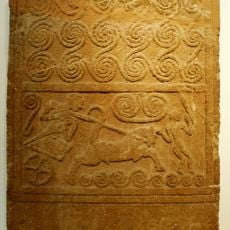
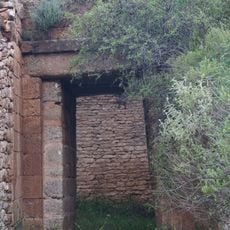
The facade around the entrance was once decorated with half-columns of green stone and red marble, though these were removed long before the site was formally studied. Fragments of this decoration are now held in museums in Athens and London rather than at the site itself.
The community of curious travelers
AroundUs brings together thousands of curated places, local tips, and hidden gems, enriched daily by 91,167 contributors worldwide.