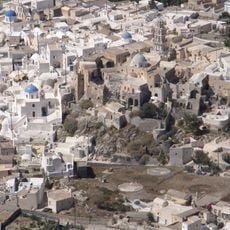
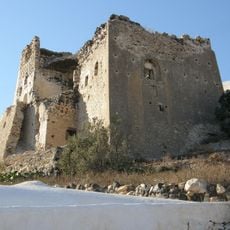
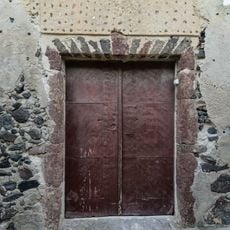
Panagia Episkopi, Byzantine church in Episkopi Gonias, Greece
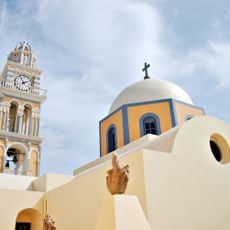
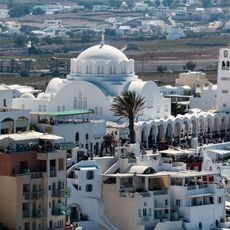
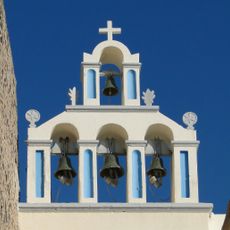
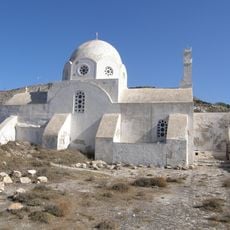
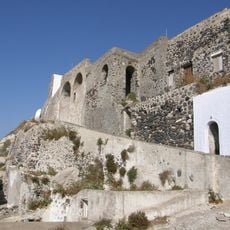
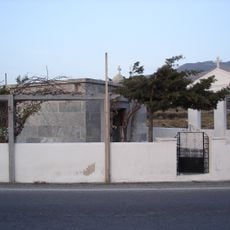
Panagia Episkopi is a cross-in-square domed church with a Greek-cross plan 14 m long and 11.1 m wide, its crossing carrying a dome on a tholobate. Walls are pale plaster, roofs reddish-brown tile; a tall white bell tower with arched openings stands to the left rear. The east arm holds a half-round apse with a mullioned window filled with red, green, yellow and blue glass bricks.
The church was built at the end of the 11th century under Emperor Alexios I Komnenos, replacing an earlier place of worship that stood on the same site. This reconstruction marked an important moment in the region's religious development during the middle Byzantine period.
The name Episkopi means "episcopal", as the church was the seat of the Orthodox diocese of Santorini until 1207 and again from 1537 to 1827. Inside, the best-known treasure is the 12th-century icon of the Panagia Glykofilousa, the "sweetly kissing Madonna". The southeast annex, added in 1767 to settle a dispute between Roman and Orthodox Christians, was opened to the chancel to serve as a chapel for the island's Catholics.
The church stands about 600 metres southeast of Mesa Gonia, reached by a partly paved road that ends at a parking area directly north of the building. From Kamari on the east coast it is roughly 2 km away, and Fira lies 5 km to the northwest. The main entrance faces west, with two further doors each on the north and south sides.
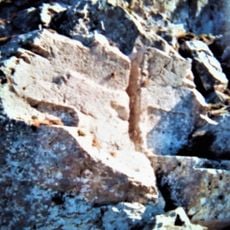
The two icons above the Holy Door are modern replacements: the 17th-century Panagia and Christ Pantocrator panels were stolen in 1982. Look instead at the marble intarsia beside the door, where the carved hollows were filled with a red mixture of wax and mastic that has since darkened.
The community of curious travelers
AroundUs brings together thousands of curated places, local tips, and hidden gems, enriched daily by 94,124 contributors worldwide.