Great Theatre of Argos, Greek theatre in Argos, Greece
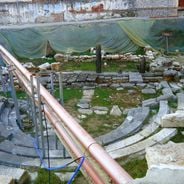
The Great Theatre of Argos is cut into the slope of Larissa hill, with a narrow rectilinear cavea of 83 rows of seats holding about 20,000 spectators. Two landings divide it into three horizontal sections, and staircases split it into four cunei matching the tribes of Argos. The Romans added a proskenion over part of the orchestra, with a hyposkenion beneath.
The theatre was built in 320 BC against the slope of Larissa hill, and the Nemean Games moved to Argos in 270 BC, using it as their main venue. Around 120 AD it was renovated in Roman style, when a proskenion with a hyposkenion was added over part of the orchestra. In 1988 archaeologists uncovered the full circular orchestra bounded by stone.
The theatre's cavea was divided into four cunei matching the four tribes of Argos, so spectators sat by tribal affiliation. The Nemean Games moved here from Nemea around 270 BC and were held every two years, with music and drama contests staged alongside the athletics. A bisellium, a reserved seating block, was set aside for honorary leaders.
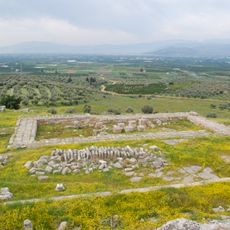
The site sits on a sloped terrain with uneven stone surfaces, so sturdy footwear and careful footing are essential. The views from the higher rows across the landscape are best enjoyed during daylight hours.
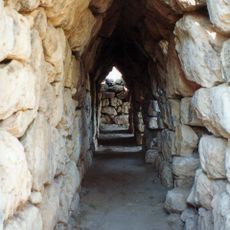
Two side corridors called parodoi provided access to the performance area and allowed choruses to enter in procession. These lateral passages were a distinctive feature of Hellenistic theatre design.
The community of curious travelers
AroundUs brings together thousands of curated places, local tips, and hidden gems, enriched daily by 92,820 contributors worldwide.