Conciergerie de Paris, Former courthouse and prison in the 1st arrondissement of Paris, France
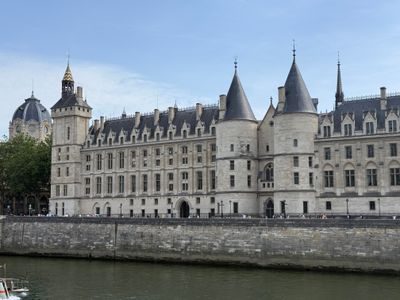
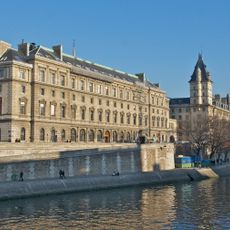
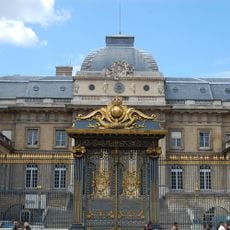
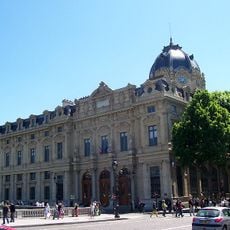
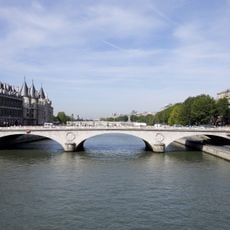
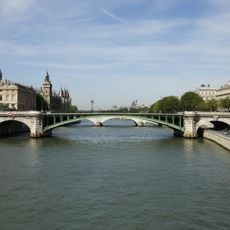
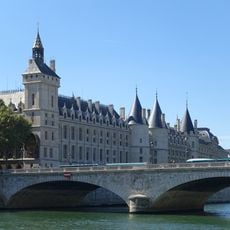
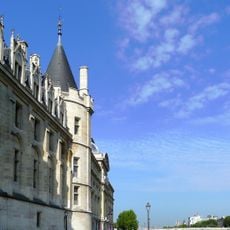
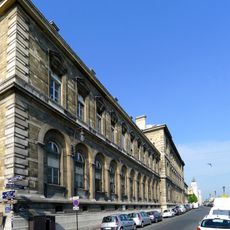
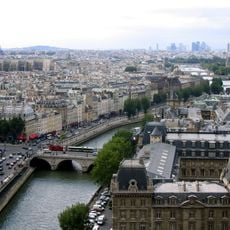
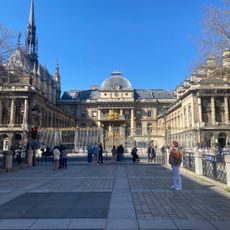
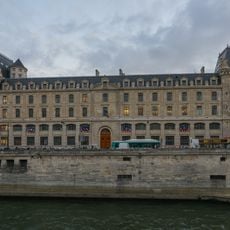
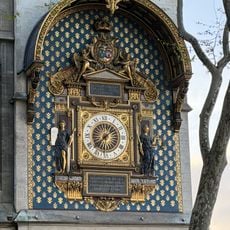
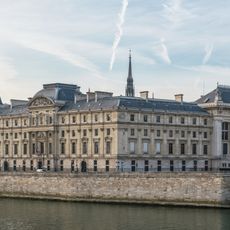
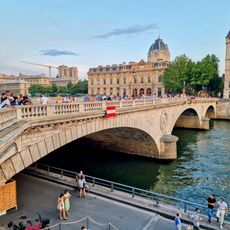
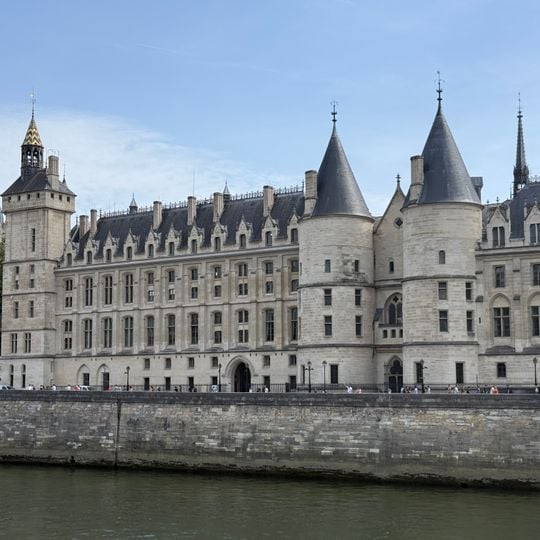
The Conciergerie is a former courthouse and prison on the Île de la Cité in Paris, originally part of the Palais de la Cité. Its light stone facade along the Seine has a square tower with a dark lantern turret at one end and two round towers with conical roofs at the other, plus rows of tall windows and a steep slate roof with dormers. Two large medieval halls survive from the royal palace.
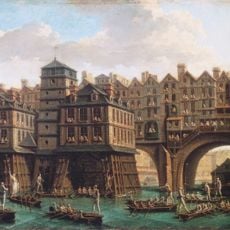
Hugh Capet built the fortified Palais de la Cité around the end of the 10th century on the site of a Gallo-Roman fortress. Philip II added the towered Seine façade and the great hall, and named a concierge to run the palace, which gave the building its name. Charles V moved his residence to the Louvre and Hôtel Saint-Pol between 1364 and 1380, after which cells were added and the building became a prison. During the Revolution the Revolutionary Tribunal sat here, and 2,781 prisoners including Marie-Antoinette were tried and sent to the guillotine.
The name comes from the royal keeper who lived here during medieval times and managed the building. Visitors can walk through the former cells today and understand how prisoners lived during the Revolution.
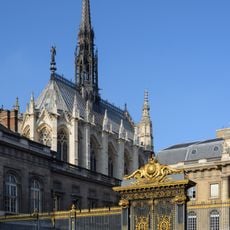
The museum sits right next to Sainte-Chapelle, making a joint visit easy to plan. It works best to arrive early in the morning or just before closing when fewer people are around.
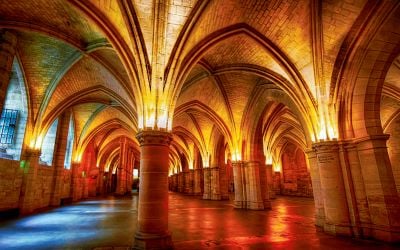
The Salle des Gardes and Salle des Hommes d'armes, the two surviving halls of the medieval palace, are what remain of Philip II's great hall with its twin naves. A fragment of the immense black marble table from Germany, decorated with fleurs-de-lis, is set into the wall of the lower hall.
The community of curious travelers
AroundUs brings together thousands of curated places, local tips, and hidden gems, enriched daily by 92,723 contributors worldwide.