Col d'Izoard, Mountain pass in the Hautes-Alpes, France
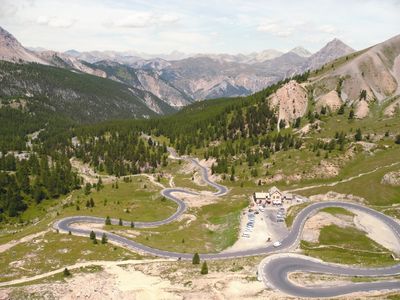
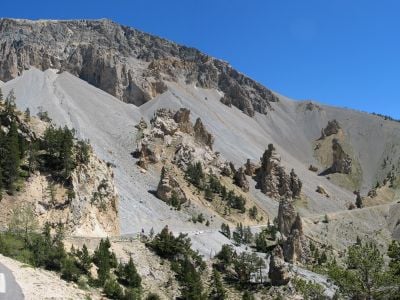
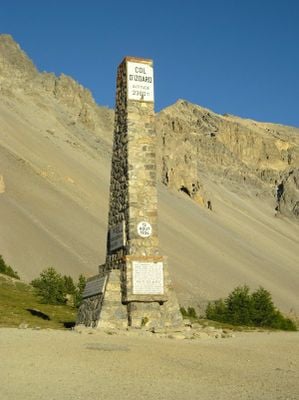
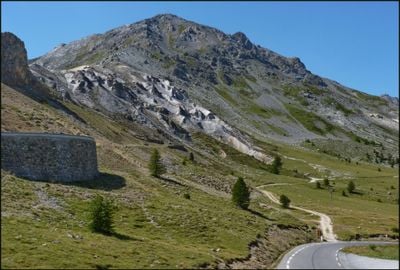
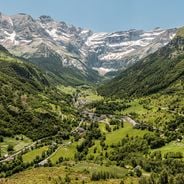
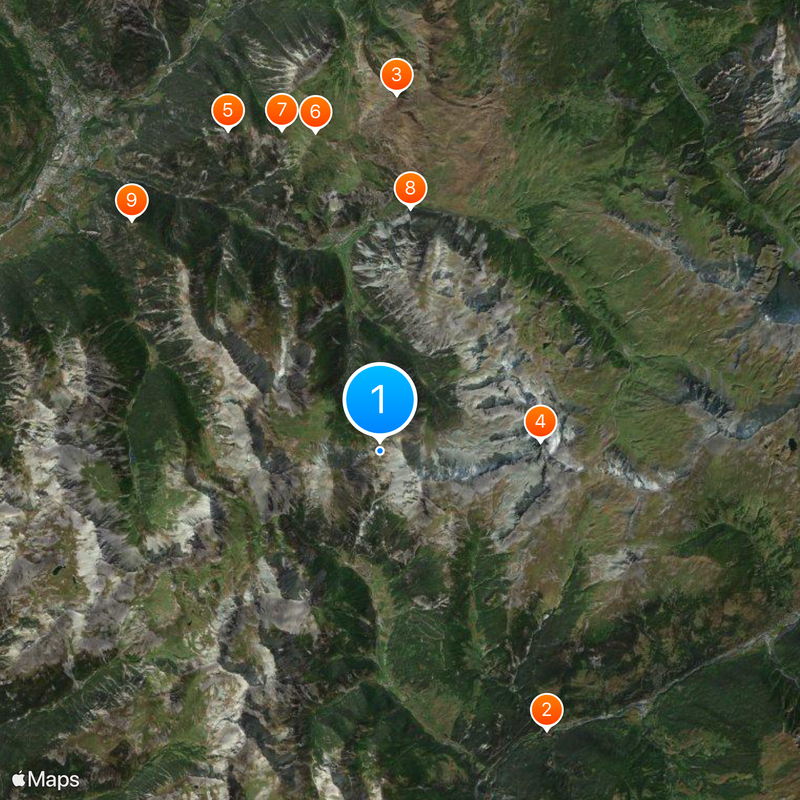
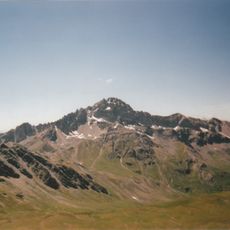
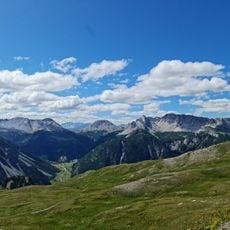
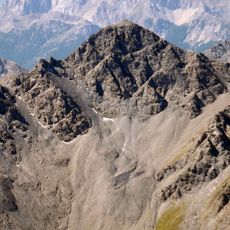
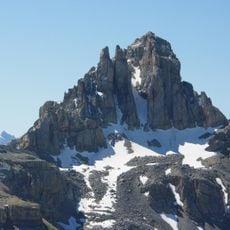
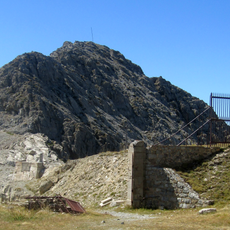
The Col d'Izoard is a mountain pass in the Hautes-Alpes department, northwest of the Queyras massif, linking Briançon to Château-Ville-Vieille. The D902 road crosses a pale scree saddle between dark rock formations; on the south side, the Casse Déserte is a nearly lunar cirque of cargneule pinnacles and stone chimneys rising from dolomite scree at 2,220 m. A stone monument at the summit bears plaques reading "COL D'IZOARD" and "ALTITUDE 2360 m".
The road over the pass was built between 1893 and 1897 under General Baron Berge, and a memorial was raised at the summit in his honour in 1934. The Tour de France first crossed it in 1922 and has returned 34 times; in 2017 Warren Barguil won stage 18, the first stage finish ever held at the col. A cycling museum opened at the summit in July 1989.
The pass is named in 1475 records as Collum Ysoart; linguist Jacques Lacroix proposed in 2021 that it comes from a Gaulish Isovaritu, "passage of the lower border". A small cycling museum opened at the summit in July 1989, run by the Queyras regional nature park, and a stone stele near the Casse Déserte carries plaques to Louison Bobet and Fausto Coppi.
The pass is accessible during warmer months via the D902 road from either side. Weather can change quickly at this elevation, so dressing in layers and bringing water and snacks is sensible for any visit.
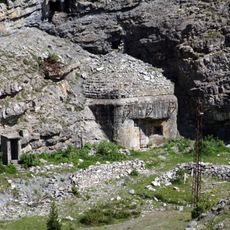
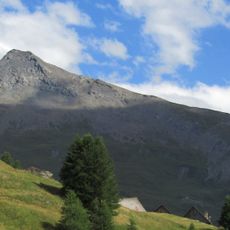
The southern slope features the Casse Déserte, a barren section with exposed scree and weathered stone that looks moonlike compared to the forested slopes on the other side. This stark landscape creates a memorable transition during the climb.
The community of curious travelers
AroundUs brings together thousands of curated places, local tips, and hidden gems, enriched daily by 93,673 contributors worldwide.