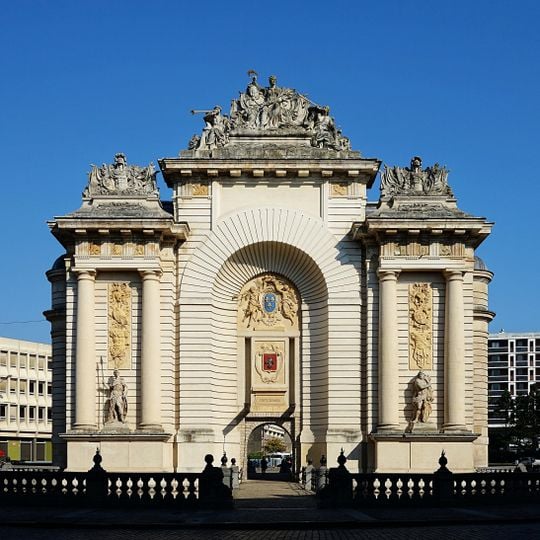
Paris Gate, Triumphal arch and city gate in Lille, France.
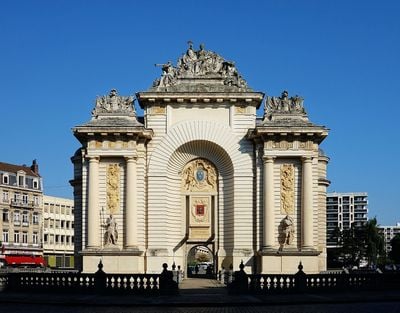
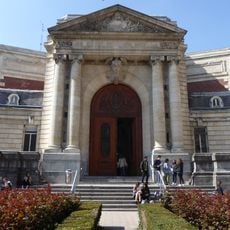
The Paris Gate is a city gate with two different facades: Simon Vollant's late-17th-century triumphal arch on the south side and Louis-Marie Cordonnier's town-side facade of 1888–1892. The central archway is flanked by wings with paired Doric columns and statues of Mars and Hercules, while the roofline carries angels and an allegory of Victory.
On 28 August 1667, after a ten-day siege, Louis XIV entered Lille through the earlier Gate of the Sick and received the city keys. He commissioned Simon Vollant to build a triumphal gate on the spot; works ran from 1686 to 1694, though Dutch sources give 1685–1692. The gate was classified as a historic monument in 1875.
The gate stands as a symbol of French power and royal glory during the reign of Louis XIV. The carved figures adorning its sides speak of triumph and authority, immediately visible to anyone passing through.
The gate stands on place Simon-Vollant, reached by metro at Mairie de Lille. The south facade faces boulevard Denis-Papin, the other side rue Pierre-Mauroy, and a stone parapet with cast-iron grenades runs around the monument. The vaulted passage is open on foot; the surrounding square is flat.
The structure did not always stand in this location: it replaced an earlier gate called the Gate of the Sick. In the 1890s it underwent substantial rebuilding by architect Louis-Marie Cordonnier, transforming its appearance.
The community of curious travelers
AroundUs brings together thousands of curated places, local tips, and hidden gems, enriched daily by 93,406 contributors worldwide.