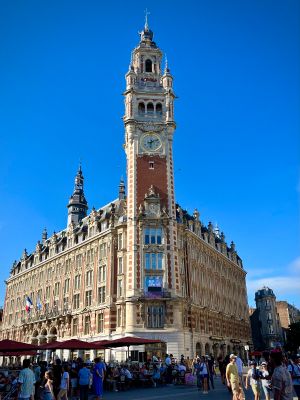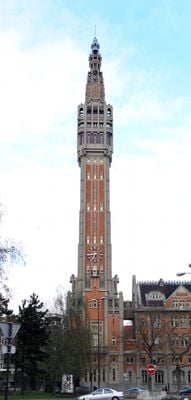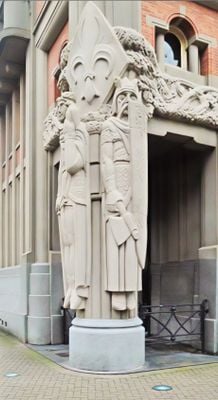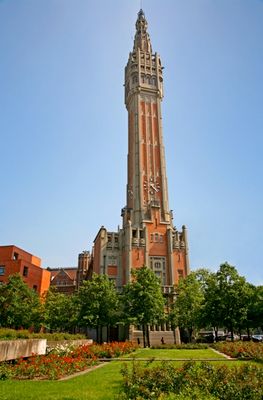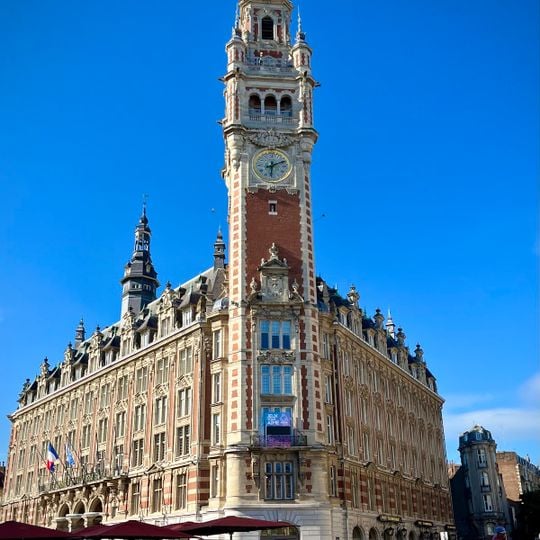
Belfry of Lille, Art Deco belfry in Lille, France
The Belfry of Lille is a 104-meter-tall structure forming part of the City Hall, combining brick and concrete with Art Deco and Flemish neo-renaissance design elements. The tower contains multiple levels, a working bell mechanism, and an observation platform near its top.
The structure was designed and built between 1924 and 1932 by architect Émile Dubuisson, commissioned by the city's socialist administration. It arose during a period when the city was advancing its reconstruction following the First World War.
The structure embodies the city's pride in its industrial past and was built as a symbol of the labor movement and modern governance. It shows how residents expressed their identity as a progressive, work-focused community.
The platform is typically accessible during daytime hours and can be reached by elevator, making the climb easier. Clear weather on a day visit offers the best views, especially in the morning or early afternoon.
The brick and concrete construction was technically innovative for the 1920s and set new standards for public buildings. This blend of modern materials with historical styling made it a pioneering example of urban architecture for its era.
The community of curious travelers
AroundUs brings together thousands of curated places, local tips, and hidden gems, enriched daily by 91,648 contributors worldwide.