Fort Saint-Sauveur, Military fort in Saint-Sauveur district, Lille, France
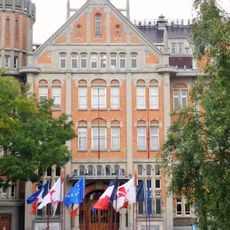
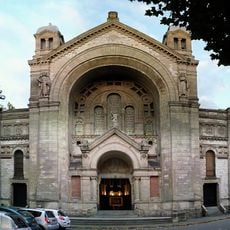
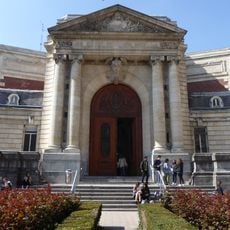
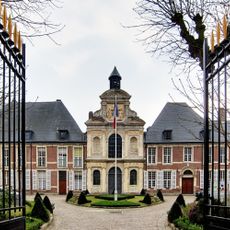
Fort Saint-Sauveur is a military fortification in Lille's Saint-Sauveur district built with classical architectural features from the late 1600s. The site contains a chapel with white stone walls, columns with classical details, and sculptural embellishments that define its interior spaces.
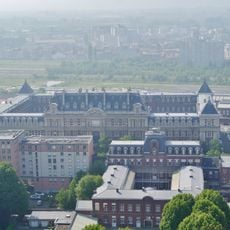
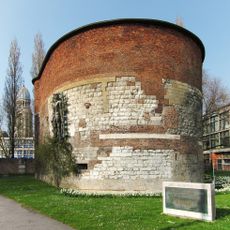
The fort existed in the Spanish period under the name Fort Campi, taking its name from the parish where it stood. From 1674 Vauban had it reworked, adding bastions to the fortified perimeter; it became one of five réduits he established and the only one bastioned towards both the countryside and the city. Louvois wrote to Vauban on 4 January 1673 that the king wanted the Saint-Sauveur bastion closed on the city side and a rampart built there able to carry cannon against the town if needed.
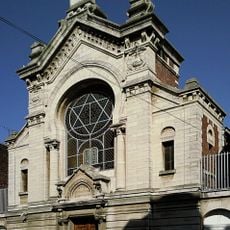
The fort takes its name from the Saint-Sauveur parish where it stands; under Spanish rule it was called Fort Campi. The chapel, built in Lezennes stone between 1674 and 1707, was consecrated by Joseph-Clément of Bavaria, Archbishop of Cologne. Its facade carries the royal arms and a frieze alternating fleurs-de-lis with the king's monogram.
The fort remains under military administration and is not open to the public on a regular basis. Access is generally available only during the annual Heritage Days events when the site opens its grounds to visitors.
Vauban called it a small citadel: unlike the other réduits, Saint-Sauveur was bastioned both towards the countryside and towards the city, so its guns could fire into the Saint-Sauveur quarter if it rose in revolt. Louvois wrote to Vauban on 4 January 1673 ordering the Saint-Sauveur bastion closed on the town side.
The community of curious travelers
AroundUs brings together thousands of curated places, local tips, and hidden gems, enriched daily by 94,398 contributors worldwide.