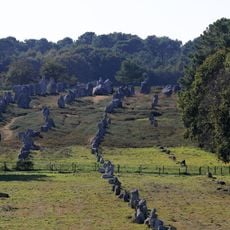
Ménec alignments, Neolithic stone row in Carnac, France
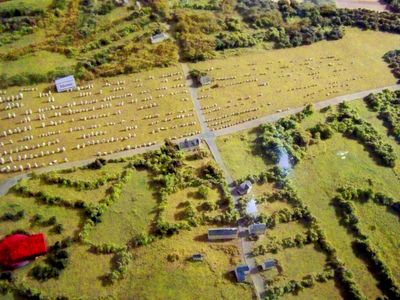
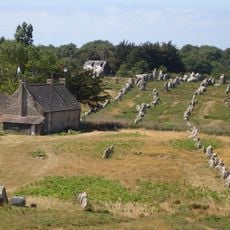
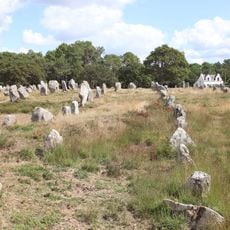
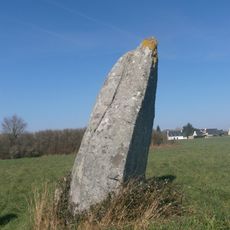
The Ménec alignments are a series of granite standing stones in Brittany that stretch for over a kilometer across the landscape. The stones are arranged in eleven parallel lines and form a circular stone grouping at their western end.
The rows were built in the Neolithic and are listed as historical monuments since 1889. The village of Ménec and the later departmental road cut through the lines, and stones were probably lost then. Alexander Thom and A. Burl noted that the rows are oriented toward the solstice sunrises and sunsets.
The rows run southwest to northeast and the stones shrink from west to east, with the tallest at the western end. Alexander Thom and A. Burl noted an alignment on the solstice sunrises and sunsets. The western enclosure, often called a cromlech, is an oval 90 by 70 metres bounded by 71 menhirs.
The site is reached by walking paths that depart from the visitor center and lead to the stones. Protective barriers keep visitors on marked trails to help preserve the ancient stones.
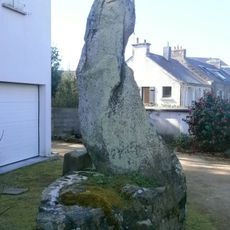
The oval enclosure at the western end measures 90 by 70 metres and is bounded by 71 menhirs; it is often wrongly called a cromlech. Its stones are set slightly higher than the rows and are hard to make out because the hamlet of Ménec was built over it.
The community of curious travelers
AroundUs brings together thousands of curated places, local tips, and hidden gems, enriched daily by 93,465 contributors worldwide.