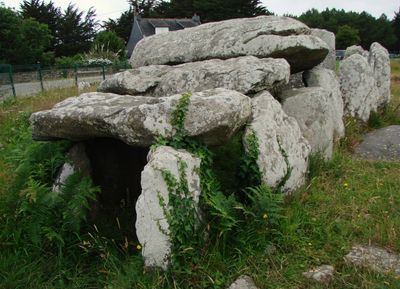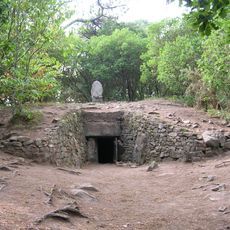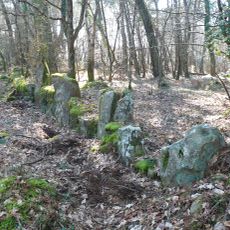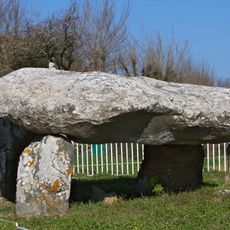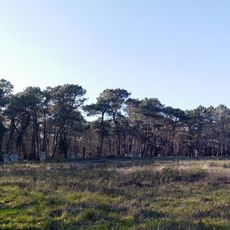
Kermario alignments, Megalithic site in Carnac, France.
Kermario consists of around 1000 upright granite stones arranged in ten parallel rows spanning more than a kilometer across the Breton landscape. The stones vary in height and weight, creating a structured pattern that dominates the terrain.
The stones were erected during the Neolithic period between 4500 and 3300 BCE, placing them among Europe's oldest human structures. This monumental work predates the Egyptian pyramids and demonstrates the capabilities of prehistoric societies.
The rows reflect how Neolithic communities valued collective work and shared purpose in shaping their landscape. These aligned stones likely held meaning for the people who built them, whether for ritual, gathering, or marking important spaces.
The stones are freely accessible and can be visited at any time; walking through them gives the best sense of their scale and arrangement. A nearby visitor center offers information and guided tours to help understand this prehistoric site.
The menhirs decrease in height from west to east, creating an intentional perspective effect that extends across the entire length. This gradual reduction suggests that the builders deliberately worked with spatial perception and visual illusion.
The community of curious travelers
AroundUs brings together thousands of curated places, local tips, and hidden gems, enriched daily by 92,042 contributors worldwide.