Moustoir tumulus, Neolithic burial mound in Carnac, France.
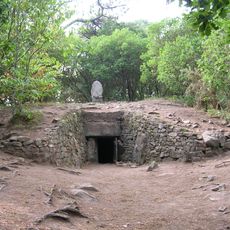
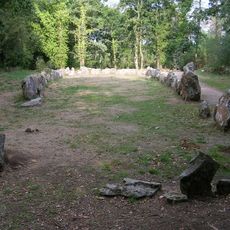
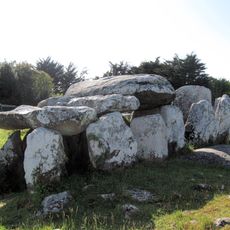
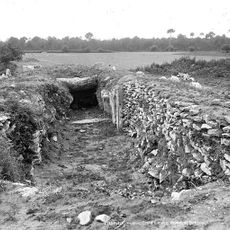
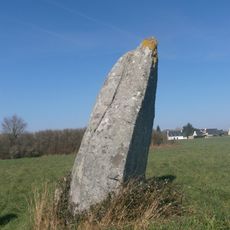
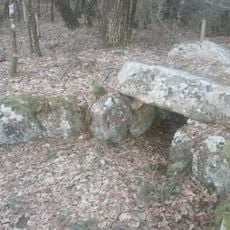
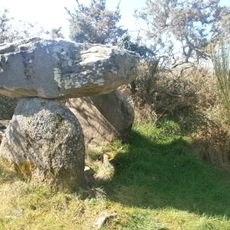
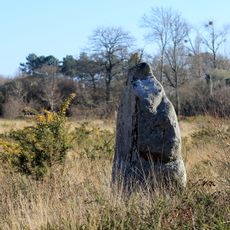
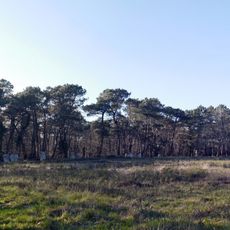
Moustoir tumulus is an oval Neolithic mound at Carnac, 85 m long, 36 m wide and 5 to 6 m high, oriented east-west. A 2 m menhir stands on its eastern summit, and a fallen 3.25 m menhir lies near the western end. Beneath the earth, a rectangular chamber with four capstones opens to the south-east, followed by a cairn and two cells.
The tumulus was excavated in 1864 by R. Galles and restored by Zacharie Le Rouzic in 1926–1927. It was listed as a monument historique in 1889. The western chamber, opened to the exterior after Le Rouzic's restoration, contained broken pottery, flint blades, a serpentine olive and a jasper disc.
The mound is also called Er Mané, a Breton name. Excavations in 1864 by R. Galles found broken pottery, flint blades, a serpentine olive and a jasper disc in the western chamber. A large reconstructed clay vase, about 12 litres, came from the cairn.
The site is open year-round and sits along the road toward Le Moustoir village, making it easy to find from the main path. Visitors can approach on foot without obstacles or special requirements.
A standing stone that originally crowned the mound fell over and was later rediscovered during excavations, then restored to its original position. This restoration preserves how the site looked when it was first built.
The community of curious travelers
AroundUs brings together thousands of curated places, local tips, and hidden gems, enriched daily by 94,657 contributors worldwide.