Aiguille de la République, Mountain summit in the Aiguilles de Chamonix, Haute-Savoie, France
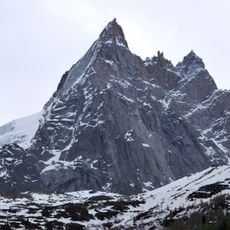
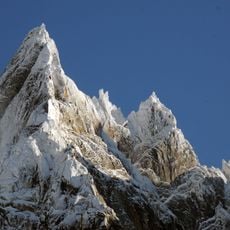
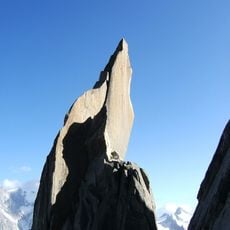
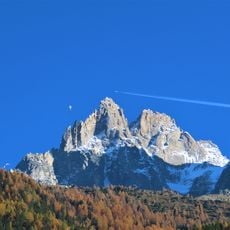
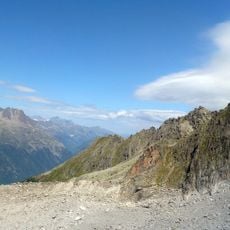
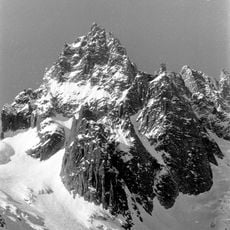
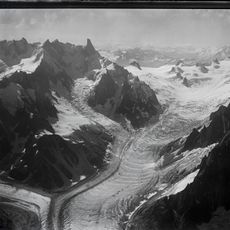
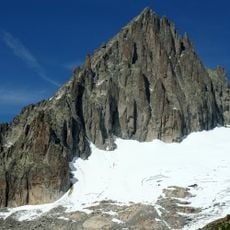
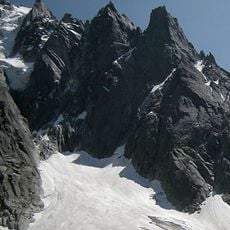
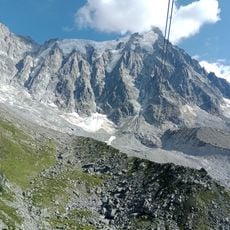
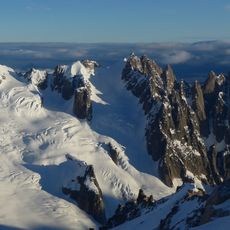
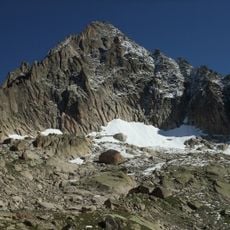
The Aiguille de la République is a summit of the Aiguilles de Chamonix in the Mont-Blanc massif, rising to 3305 metres on the north-east flank of the Aiguille des Grands Charmoz. Its upper part is a steep face of bare grey rock with snow and ice in the gullies, and a slender rock spire stands to the left, separated by a notch from the main crest. The final monolith is 15 metres high, particularly steep and smooth.
Joseph Ravanel had tried the 15-metre summit monolith days before and failed. On 29 July 1904 H.E. Beaujard reached the top with guide Joseph Simond and porters Louis Simond and Alfred Tournier, Simond firing a crossbow sent from Paris to pass a knotted rope over the block. That rope throw remained the usual method until 1971, when Bouttet, Germain, Mollier and Mlle Lange fixed expansion bolts.
The name comes from the summit's profile, which resembles a Phrygian bonnet, the cap worn by freed slaves in antiquity and adopted as a symbol of the French Revolution. The peak rises to 3305 metres on the north-east flank of the Aiguille des Grands Charmoz, above the Chamonix valley.
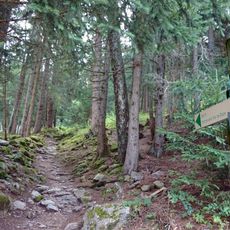
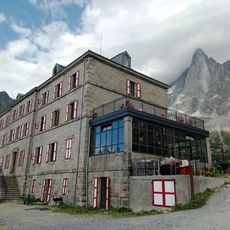
The summit monolith is 15 m of steep, smooth rock; the classic way over it was a thrown knotted rope until 1971, when MM. Bouttet, Germain and Mollier with Mlle Lange bolted an expansion-piton line for aid climbing. It now goes free at 6c. Approach from the Refuge de l'Envers des Aiguilles, about 800 m southeast.
In the early days, climbers used a crossbow sent from Paris to pass a knotted rope over the summit, a technique that remained in use until 1971. This unusual method was necessary to overcome the steep rock formation at the top.
The community of curious travelers
AroundUs brings together thousands of curated places, local tips, and hidden gems, enriched daily by 93,669 contributors worldwide.