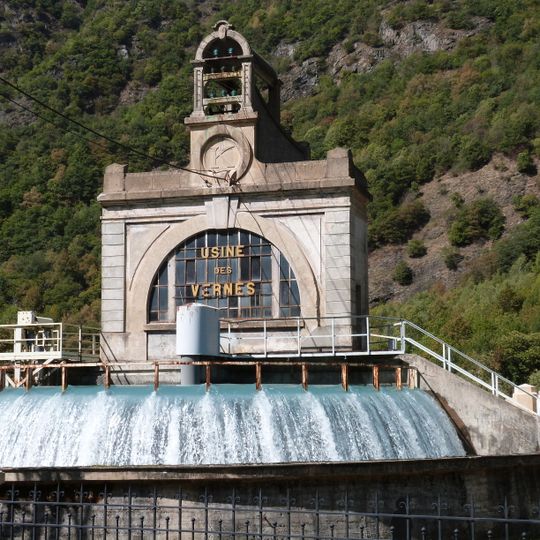
Centrale hydroélectrique des Vernes, Historical hydroelectric power station in Livet-et-Gavet, France
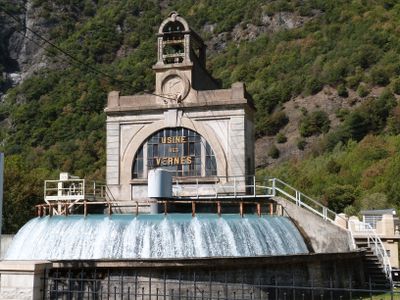
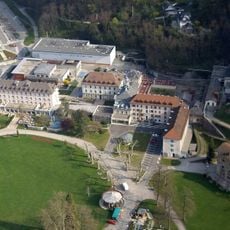
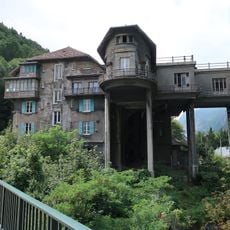
The facility is a decommissioned hydroelectric power station featuring two Francis turbines that generated 4.27 MW of capacity until closure in 2020. The site consists of concrete and stone structures arranged around an upper terrace with a French-style garden including flower beds and a monumental fountain.
Built between 1917 and 1918, the station powered electric furnaces for synthetic cast iron production used in World War I ammunition manufacturing. It then supplied electricity to the valley for over a century until operations ceased in 2020.
The structure was designed by Charles-Albert Keller and recognized as a Historic Monument in 1994 for its industrial architecture. It shows how engineers of that era integrated practical functions with thoughtful design choices.
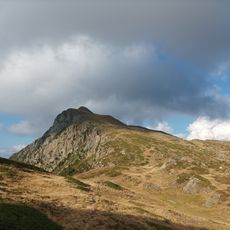
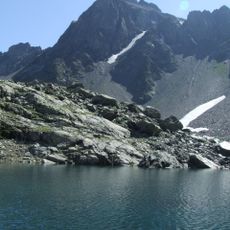
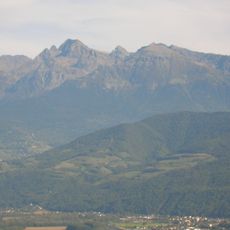
The site sits in a mountain valley near a river and is accessible via mountain paths, though the terrain is uneven. Visitors should wear sturdy footwear since the location includes stairs and cobbled pathways.
The grand fountain on the upper terrace is actually a concealed surge tank, disguising an engineering necessity as an ornamental feature. This creative solution reveals how the builders wove beauty and utility together into a single structure.
The community of curious travelers
AroundUs brings together thousands of curated places, local tips, and hidden gems, enriched daily by 92,928 contributors worldwide.