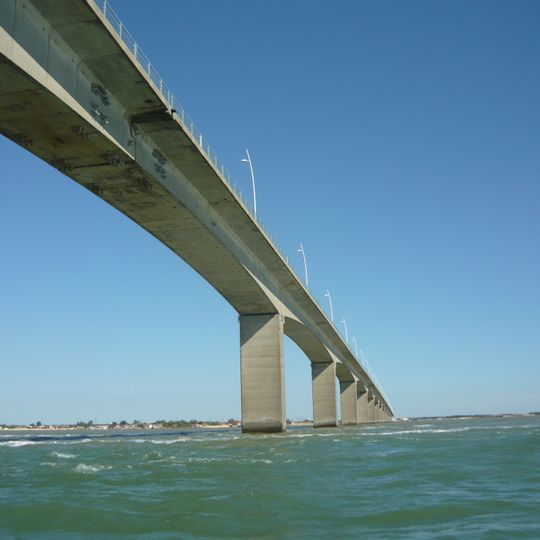
Oléron Bridge, Bridge in Bourcefranc-le-Chapus, France
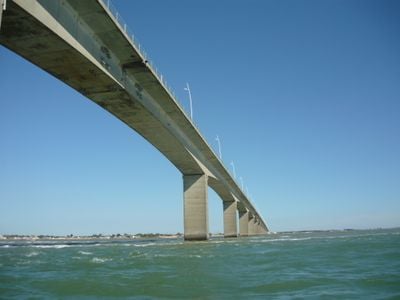
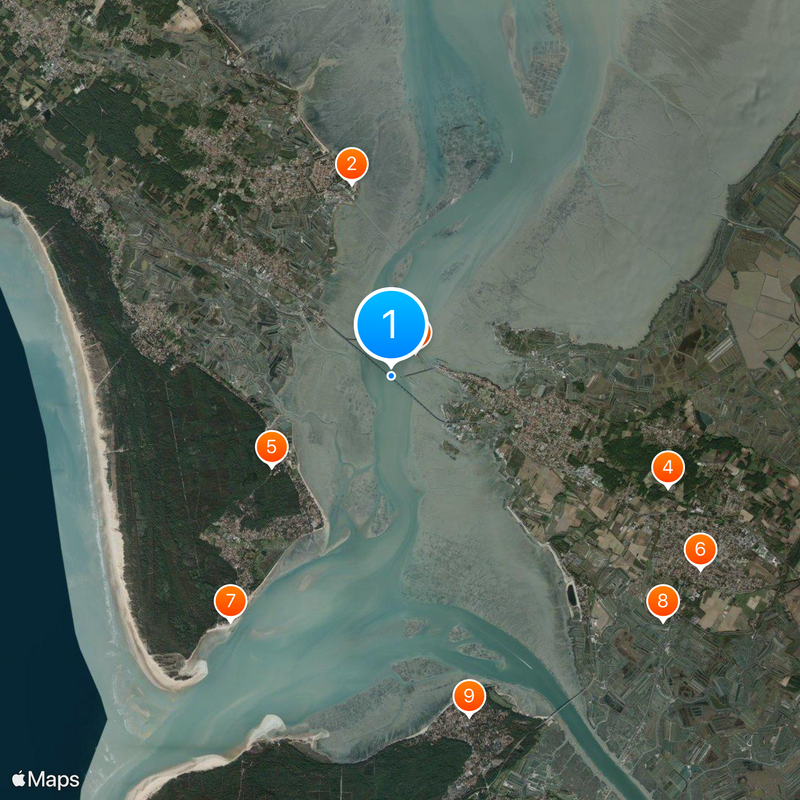
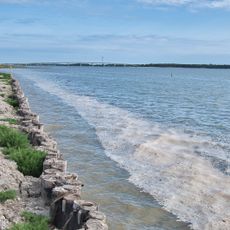
The Oléron Bridge stretches across the Coureau d'Oléron strait between the mainland and Oléron Island, covering a distance of 2,862 meters (around 9,390 feet). It consists of 46 continuous concrete sections arranged in a gentle curve over the water.
Plans to link Oléron to the mainland date back to 1875, when engineer Fleury proposed a steam-tram tunnel; later ideas included a transporter bridge and a stone bridge. Work by Campenon-Bernard began in May 1964 and the viaduct opened on 21 June 1966, built from 860 precast segments. It was France's longest bridge until the Saint-Nazaire bridge took the title in 1974.
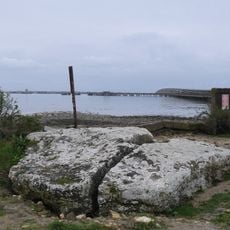
The bridge replaced a ferry link; its two old docking jetties still stand just south of the span, now closed to the public. Tolls were charged until 1991, and in 2014 island councillors voted for an eco-tax on outside visitors, a plan dropped after a cancelled referendum.
Inside the hollow deck runs a water pipeline, electrical lines, telephone cables, and fiber optics linking the island to the mainland. Pedestrians and cyclists can cross on separate paths while enjoying views of the coastline.
During assembly of the prestressed beams in the 1960s, construction crews advanced at a rate of eight meters (about 26 feet) per day. This pace was considered a notable technical achievement in bridge construction at the time.
The community of curious travelers
AroundUs brings together thousands of curated places, local tips, and hidden gems, enriched daily by 93,161 contributors worldwide.