Mont Cenis Pass, Mountain pass in Savoie, France
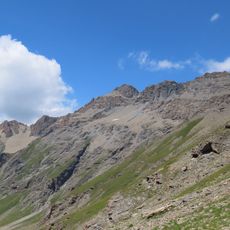
Mont Cenis Pass is a mountain crossing in the Alps at about 2,081 meters (6,827 feet) elevation that links France and Italy. A paved road runs over the pass, allowing people to drive between the two countries across the Alpine range.
Napoleon Bonaparte had the carriage road between Susa and Saint-Jean-de-Maurienne built between 1803 and 1810 under engineers Derrien and Ducasse, together with a new hospice building later drowned by the reservoir. The route served the rapid movement of armies, as in 1859 during the Wars of Independence. In May 1812 Pope Pius VII, Napoleon's prisoner, was taken to France over the pass.
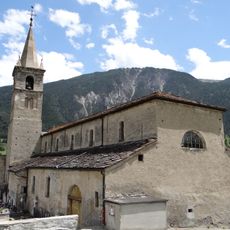
The name Mont Cenis likely comes from "mont des cendres" (mountain of ashes); ash traces were found during road construction. From the 12th century the pass carried merchants heading to the Champagne fairs, and pilgrims on the Via Francigena passed through on their way to Rome. In Novalesa, the Casa degli affreschi, probably the medieval Locanda della Croce Bianca, keeps frescoes of the coats of arms of travellers' home regions.
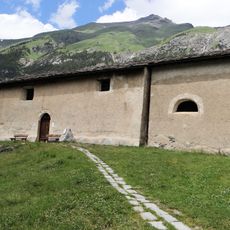
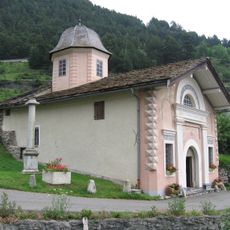
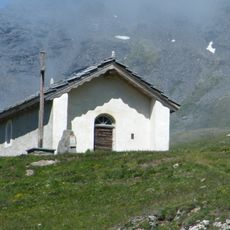
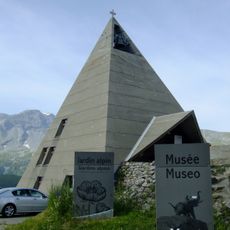
The pass road is closed each year from 1 November to 30 April because of its gradient, altitude and heavy snowfall from easterly storms; in spring 2016 it reopened only on 4 May after late snow clearing. The highest point of the road, at 2,094 m, lies at the Plan des Fontainettes, beside the Notre-Dame-de-l'Assomption chapel and an alpine garden. The carriage road from Lanslebourg to Susa, built between 1803 and 1810, remains the route over the pass.
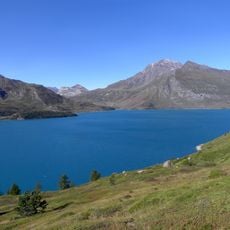
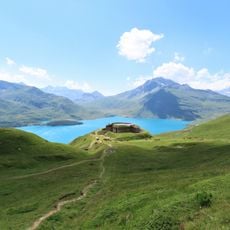
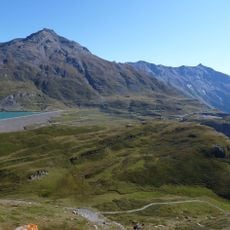
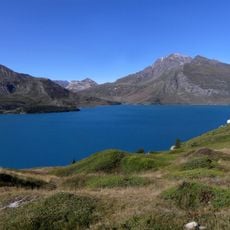
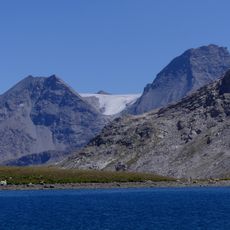
The pass lies entirely in France only since the 1947 Paris Treaty, which moved the border off the main Alpine watershed; before that the frontier with Italy ran across the pass from 1860. The summit plateau opens onto a lake rather than dropping straight down the far side.
The community of curious travelers
AroundUs brings together thousands of curated places, local tips, and hidden gems, enriched daily by 93,115 contributors worldwide.