Ilori Church, Eastern Orthodox church in Ilori, Georgia
Ilori Church is an Eastern Orthodox house of worship in the Ochamchira District of western Georgia, built in the medieval period. The structure features stone construction, a single-nave layout, and architectural details typical of early Christian religious buildings in the Caucasus region.
Built in the first quarter of the 11th century, the church was restored in the 17th century by Levan II Dadiani and burned by Ottoman troops in 1730, after which the princes of Odishi rebuilt it. In the 1840s it was thoroughly repaired, and in 2006 Georgia granted it the status of a monument of national importance.
The church is named after St George, whose feast on 21 October draws pilgrims; a 17th-century account by Jean Chardin describes a young man bringing a stolen ox into the church at night for the festival. The building holds a reliquary cross of St George, its main relic, and five stones with Georgian inscriptions in the eastern facade.
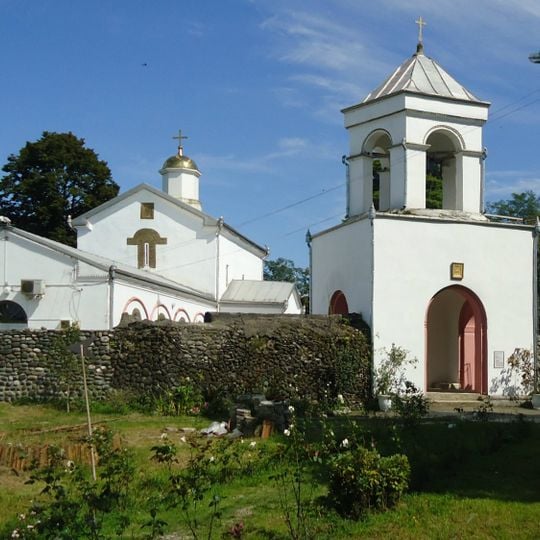
The church stands in the centre of Ilori village, in the Ochamchira District; the grounds are enclosed by a cobblestone wall, with a bell tower above the gate. Regular services are held and pilgrims and tourists are received, as of 2022 under the Abkhazian Orthodox Church. Since the church lies on territory outside Georgia's control, Georgian specialists cannot study or carry out work on the building.
The five stone slabs on the east facade carry Georgian inscriptions in all three scripts — asomtavruli, nuskhuri and mkhedruli — dated to the first quarter of the 11th century, possibly cut by one hand. A relief of St George sits among them. In 2010 restoration the east wall was plastered over, and the interior frescoes were whitewashed.
The community of curious travelers
AroundUs brings together thousands of curated places, local tips, and hidden gems, enriched daily by 93,464 contributors worldwide.