Kelasuri Wall, Archaeological site in Abkhazia, Georgia
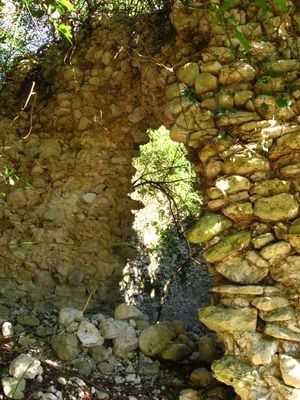
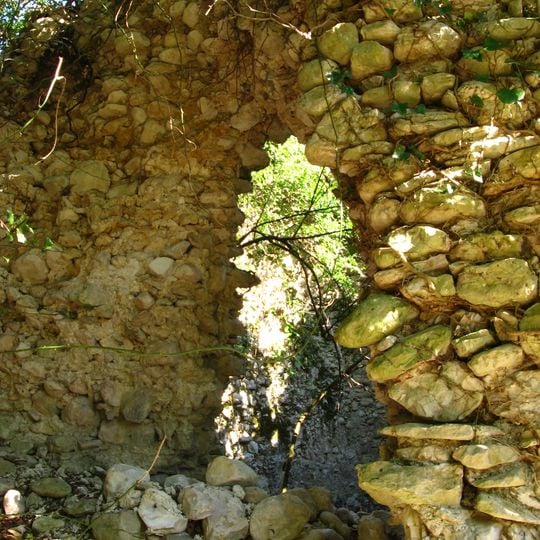
Kelasuri Wall is an ancient defense system stretching roughly 160 kilometers from the Black Sea coast inland into Abkhazia, marked by approximately 300 rectangular towers. The structure cleverly follows the hilly terrain and merges natural barriers with built elements to create a continuous fortified line.
The wall's origin is disputed. Zaza Aleksidze argues it was built in the 6th century under Justinian as a stone defense against North Caucasian tribes, while Yuri Voronov held that Levan II Dadiani built it between 1628 and 1653 against Abkhaz raids. Vakhushti Bagrationi and missionary Arcangelo Lamberti also wrote of a wall raised by Mingrelian princes.
The name Kelasuri may derive from the Byzantine Greek kleisoura, a territorial unit smaller than a theme, as historian Mikhail Ivashchenko argued. The Italian missionary Arcangelo Lamberti, who lived in Colchis from 1635 to 1653, and the Georgian geographer Vakhushti Bagrationi both recorded the wall as the work of Mingrelian princes.
The wall runs from the mouth of the Kelasuri River east past Tkvarcheli to Lekukhona on the Enguri's right bank. Most surviving towers lie between the Kelasuri and Mokvi Rivers, where about 100 of over 200 stand; only four towers were found between Tkvarcheli and the Enguri. The terrain is steep and uneven, so wear sturdy shoes.
The wall's name may derive from the Byzantine Greek word kleisoura, a territorial unit smaller than a theme, as suggested by Mikhail Ivashchenko. The towers were not continuous: builders used steep slopes and gorges as natural barriers, spacing towers 300, 500 or even 1000 metres apart where the terrain allowed.
The community of curious travelers
AroundUs brings together thousands of curated places, local tips, and hidden gems, enriched daily by 93,404 contributors worldwide.