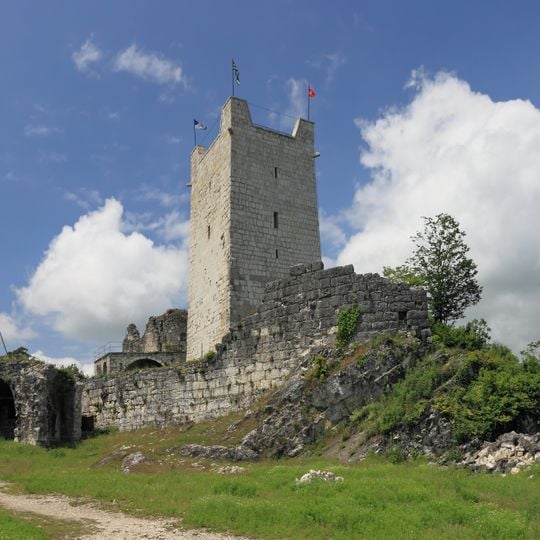
Anacopia Fortress, Medieval fortress in Novyy Afon, Georgia
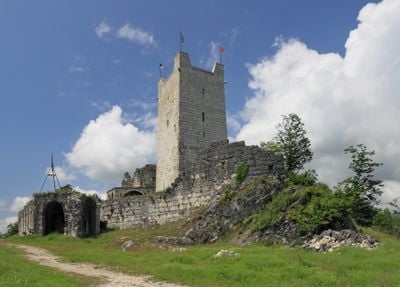
Anacopia Fortress is a medieval stronghold perched on a hillside above Novyy Afon with thick stone walls that define its defensive outline. The complex holds towers, a church, residential chambers, and a carved well that together show how people lived and defended this location.
A military structure stood here by the 2nd–4th centuries; at the end of the 7th century the Byzantines, alarmed by Arab expansion, helped build the walls around the citadel. In 736–737 Marwan ibn Muhammad besieged the fortress, then the Abkhazian capital, with 60,000 men; 1,000 Iberians and 2,000 Abkhazians under Leon I held it, and disease and fighting cost the Arabs 35,000 and 3,000 men. In 788 Suleiman ibn Isam failed to besiege it west of Anakopia.
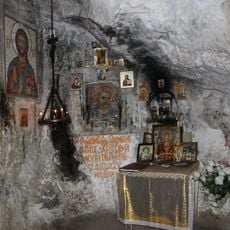
Greek monks built a small single-nave church on the summit of Iverian Mountain in the second half of the 7th century, and a second church followed on the slope in the 7th–8th centuries. In the central basilica, a stone altar survives along with frescoes showing a cross and fishes, a symbol early Christians used around the Eastern Roman empire.
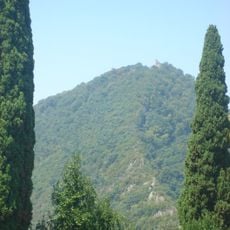
The site lies atop Iverian Mountain, about a mile inland from New Athos, and covers roughly 450 by 150 metres. The single entrance is a small gate on the south side, originally reached by a detachable wooden ladder. The walls are up to 60 centimetres thick, and the restored four-storey tower serves as a lookout with views toward the Black Sea in the south-west.
Inside the walls stands a cistern fed by a well about 25 metres deep, cut into the rock at the summit; Russian sources give the basin as 5 by 3.5 metres holding 68 cubic metres of water. It is said never to run dry, which let defenders hold out through long sieges.
The community of curious travelers
AroundUs brings together thousands of curated places, local tips, and hidden gems, enriched daily by 93,158 contributors worldwide.