Lagurka, Medieval church in Mestia Municipality, Georgia.
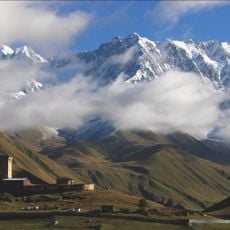
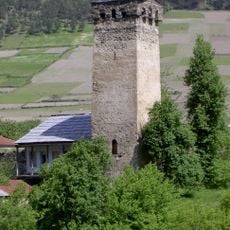
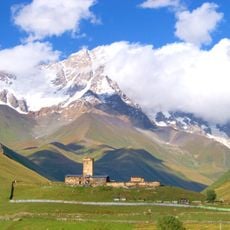
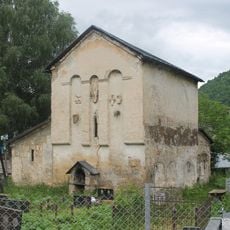
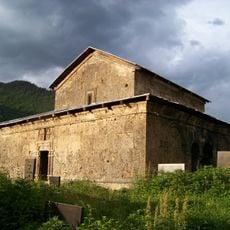
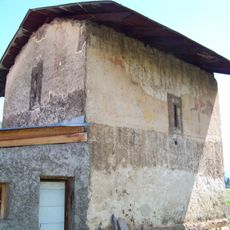
Lagurka is a hall church of yellowish limestone blocks measuring 5 by 2.70 metres, set on a high hill above the village of Khe. It has later annexes on the south and north sides and a two-storey bell-tower attached to the west that also serves as a narthex. Inside, a semicircular apse is separated from the nave by a stone tripartite iconostasis, and a barrel vault rests on a single supporting arch.
The exact construction date is unknown; by its style the extant church is dated to between the late 10th and early 12th centuries. A damaged inscription on the west wall dates the frescoes to 1111 or 1112 and names the donors, the aznauri of the Kala community. The conch and iconostasis paintings, damaged by an earthquake, were later restored by Giorgi, son of Anton.
The name Lagurka comes from the Svan word for Cyricus, one of the church's patron saints. The Svans regard it as their holiest shrine and swear their most binding oaths on the icons kept here. An all-Svan pilgrimage, kvirikoba, is held every July 28. The historian Ekvtime Taqaishvili compared Lagurka for the Svans to Delphi for the ancient Greeks.
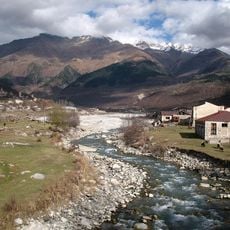
The church stands on a high hill above the village of Khe, on the left bank of the upper Enguri, at about 2200 m. The original south, north and west doorways are closed; entry is now only through a doorway cut in the later south annex. A ruined toothed stone wall surrounds the building, and a refectory and cells lie further down the slope.
The sanctuary houses the Shaliani icon, a Byzantine repoussé artwork depicting the Crucifixion that holds special spiritual significance for pilgrims. An annual festival on July 28 brings believers together to perform rituals centered on this revered object.
The community of curious travelers
AroundUs brings together thousands of curated places, local tips, and hidden gems, enriched daily by 94,405 contributors worldwide.