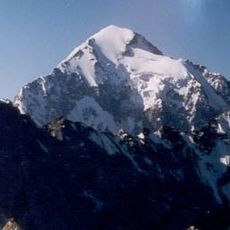
Lalveri, Mountain summit in Kabardino-Balkaria, Russia
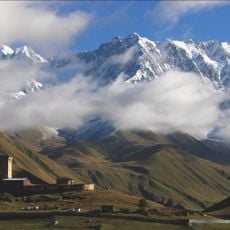
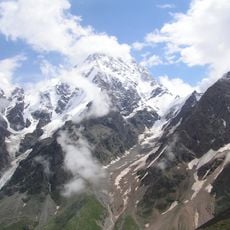
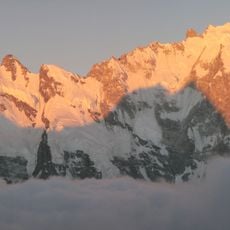
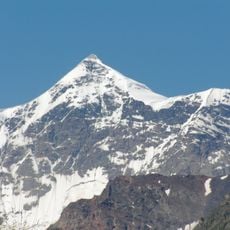
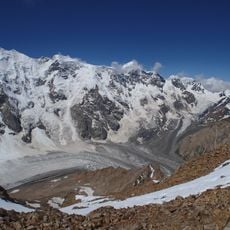
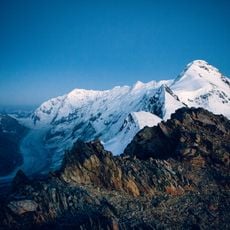
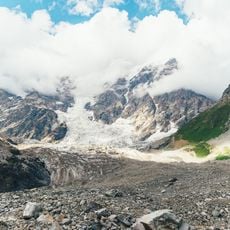
Lalveri is the westernmost summit of the Bezengi Wall, the 4,350 m ridge of the Greater Caucasus on the Georgia–Russia border. Its northern side rises from the Lower Tsanner pass over a steep snow-and-ice slope and then rock, and the summit tower sheds loose stones, especially when snow melts.
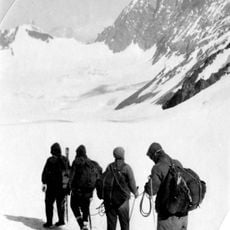
Lalveri was first climbed in summer 1933 by Werner Weckert and Lorenz Saladin, members of a Swiss expedition to the Caucasus. The peak is the westernmost summit of the Bezengi Wall, on the main Caucasus ridge. Its Svan name is linked to three explanations: spreading earth on snow to hasten melting, a winter mythological festival, or a Svan personal name, possibly a hunter.
The name Lalveri comes from Svan and has three proposed meanings: spreading earth on snow to speed melting, a winter mythological feast, or a Svan personal name, possibly a hunter. The mountain is the westernmost summit of the Bezengi Wall.
The best time to climb this peak is between June and September when weather conditions are most stable. Proper alpine gear and careful route planning are necessary due to steep terrain and potentially hazardous conditions on the upper slopes.
Lalveri is the westernmost summit of the Bezengi Wall. The first ascent was made in summer 1933 by Werner Weckert and Lorenz Saladin of a Swiss expedition to the Caucasus. Routes from the summit continue to Pic Yesenin and Gestola (3B), and a traverse of the whole wall runs on to Dykh-Tau (5B).
The community of curious travelers
AroundUs brings together thousands of curated places, local tips, and hidden gems, enriched daily by 94,018 contributors worldwide.