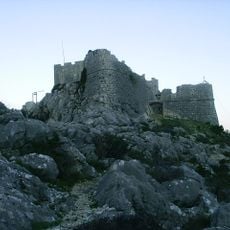
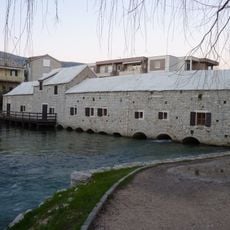
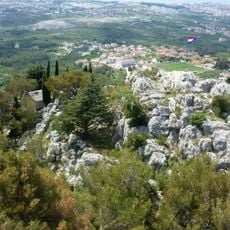
Vranjača cave, Karst cave in Kotlenice, Dugopolje, Croatia
Vranjača cave is a protected karst formation on the Mosor mountain slopes featuring two main chambers filled with limestone formations in varied shapes and colors. The passage system extends approximately 360 meters and offers visitors multiple areas to explore with natural columns, stalactites, and other rock formations.
A local landowner named Stipe Punda discovered the decorated second chamber in 1903, which sparked scientific exploration of the cave. This investigation revealed Neolithic artifacts and remains of extinct animals preserved within the chambers.
The name Vranjača first appears in Dragutin Hirc's Prirodni zemljopis Hrvatske (1905). Local people knew the entrance hall long before 1903, when Stipe Punda found the decorated second hall. In 1929, under mining engineer Rade Mikačić, villagers and the Mosor mountaineering section built the access road, stairs and rope handrails.
The cave maintains a temperature of about 15 degrees Celsius (59 Fahrenheit) year-round, making warm clothing and sturdy footwear essential for any visit. Guided tours last about an hour and lead visitors through lit pathways that are safe to navigate, though uneven ground requires careful footing.
The cave was formed as a ponor, a swallow hole where a now-dry stream once sank into the limestone. In 1934–1935, archaeologist Umberto Girometta dug through layers of clay, loam and ash and found early Neolithic pottery and burnt bone, and deeper down antlers of fallow deer and bones of the extinct cave bear.
The community of curious travelers
AroundUs brings together thousands of curated places, local tips, and hidden gems, enriched daily by 94,139 contributors worldwide.