Museum of Ethnography, National ethnographic museum in Zugló, Hungary
The Ethnographic Museum is a national institution in Budapest that presents collections from Hungary and around the world. The exhibitions display pottery, clothing, tools, and other everyday items that document the lives of different peoples.
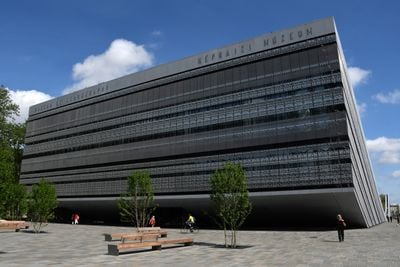
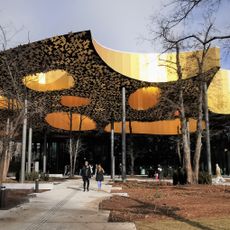
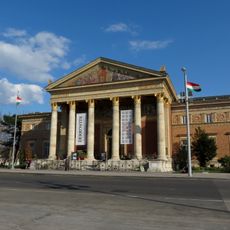
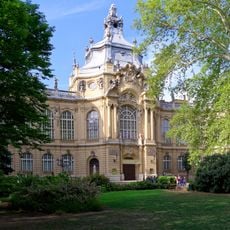
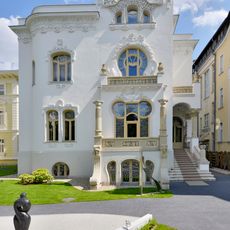
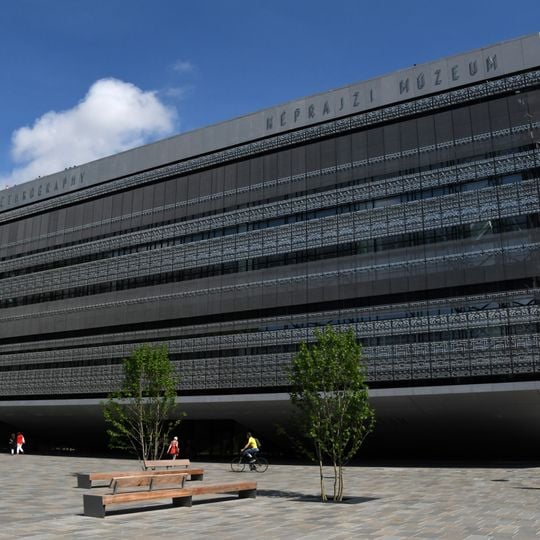
Founded in 1872 as the Ethnographic Department of the Hungarian National Museum, with János Xántus as its first director, it became independent in 1947. After housing in the Várkert Bazár, a Csillag utca apartment building, the Iparcsarnok and the Tündérpalota, it occupied the Hall of Justice from 1973 to 2017. Its current City Park building, designed by NAPUR Architect, opened on 22 May 2022.
The museum's name, Néprajzi Múzeum, means Ethnographic Museum in Hungarian. Since 1872, March 5 has been celebrated as the museum's day, marking the appointment of János Xántus as keeper of the Ethnographic Department. The Ceramics Space displays nearly 4,000 ceramics from around the world along a staircase, freely accessible to visitors.
The building sits at the Dózsa György út edge of City Park, beside the 1956 monument, and serves as a gateway into the park. About 60% of the structure lies below ground level, with exhibition halls underground and a rooftop garden above. The Ceramics Space along the staircase is free to enter.
The building's two wings follow an arc of a circle about one kilometre in diameter, rising to the height of the surrounding treetops. About 60% of the structure lies below ground level, and its roof is planted as a public garden. A free Ceramics Space along the staircase displays nearly 4,000 ceramics from around the world.
The community of curious travelers
AroundUs brings together thousands of curated places, local tips, and hidden gems, enriched daily by 92,592 contributors worldwide.