Babocsay-villa, Residential villa in District VI, Budapest, Hungary
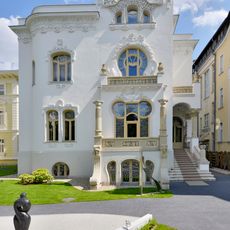
Babocsay-villa is a residential house from the early 1900s in Budapest with balanced proportions and clean lines. The building displays features typical of Hungarian architecture from that time.
The plot first held a villa built in 1872–73 to plans by Antal Weber, which never served as a residence and housed the Bellevue restaurant until its demolition in 1905. Aladár Árkay designed the present villa, built in 1906 for Babocsay Hermann in a Hungarian Art Nouveau manner. Around 1927 Lajos Kozma removed the façade ornaments and rebuilt it in a Bauhaus-like form. The Yugoslav Royal Legation opened here on 2 August 1932; since 7 February 2003 the building has housed Serbia's embassy.
The villa's name comes from Babocsay Hermann, the client who ordered a major remodelling after critics attacked the Hungarian-style ornament; he hired Kozma Lajos, who stripped the façade decorations and gave the house a Bauhaus-like look. Since 1932 the building has housed first the Yugoslav and, from 7 February 2003, the Serbian embassy.
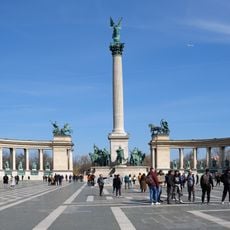
The villa stands at the corner of Dózsa György út 92/b and Andrássy út 129, right where Andrássy út opens onto Hősök tere. It is a working embassy, so the building can be viewed from the street but not entered. The M1 metro station Hősök tere and the trolleybus stops on Dózsa György út are a short walk away.
A persistent legend among embassy staff holds that poet Jovan Dučić conducted a love affair here with an unknown Hungarian countess, who gave him the villa and he passed it on to the Yugoslav state; later investigation found no evidence for it.
The community of curious travelers
AroundUs brings together thousands of curated places, local tips, and hidden gems, enriched daily by 93,953 contributors worldwide.