Villa Romana Baláca, Roman villa and history museum in Nemesvámos, Hungary.
Villa Romana Baláca is the centre of a Roman estate enclosed by an irregular stone wall around a roughly 9-hectare property, with the tenant's villa at its middle, a walled garden and further buildings of different functions. Construction began at the end of the 1st and start of the 2nd century; in the 2nd and 3rd centuries a regular rectangular central block was laid out, surrounded on three sides by a partly heated corridor with terrazzo flooring. A large clay model of the ground plan helps visitors find the numbered building sections.
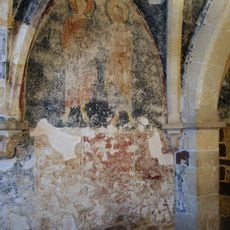
Baláca was already known as a Roman site in the 18th century, but excavations began only in 1906 under Gyula Rhé and continued in campaigns until 1926. These works uncovered wall paintings in yellow-purple, red and red-black, and mosaics with pomegranate trees and pheasants. The villa's construction started at the end of the 1st century and the central rectangular block took shape in the 2nd and 3rd centuries.
The mosaics and wall paintings reveal how wealthy Romans decorated their homes in this region with colorful designs and geometric patterns. Visitors can see how much care went into making their living spaces beautiful and impressive.
The museum operates seasonally, so checking opening hours before your visit ensures the site is accessible on your chosen day. Guided tours are available and help explain the rooms and discoveries more clearly.
The mosaic from room 20 was moved to the Hungarian National Museum in 1925, while the large mosaic floor of room 31 remains on site. Archaeologist Rhé Gyula began the excavations in 1906, and work has continued since, led later by Palágyi Sylvia.
The community of curious travelers
AroundUs brings together thousands of curated places, local tips, and hidden gems, enriched daily by 93,369 contributors worldwide.