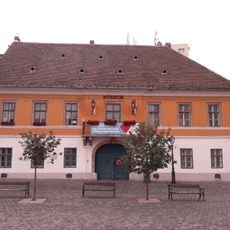
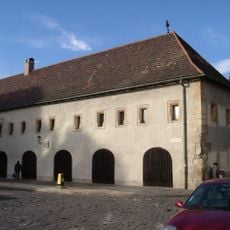
Óbuda royal Castle, Medieval castle in Budapest, Hungary
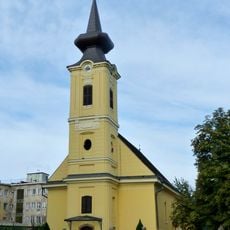
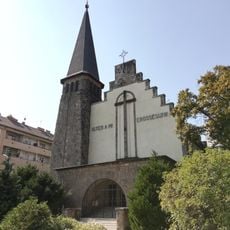
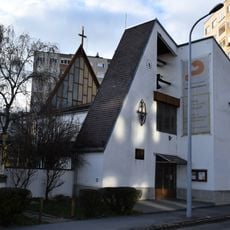
The Óbuda royal castle was a flat, regular-plan fortress built in the early 13th century in the southwest of medieval Óbuda. Its walled area formed a square of about 60 metres, surrounded by a 14–16 metre wide moat and an outer wall roughly 100 metres long. The northern entrance had a bridge and gatehouse; inside, the lower part of a red-and-white marble gate and a chapel with a polygonal apse survived, and remains lie beneath the Reformed Church on Kálvin Street.
The castle was built in the early 13th century on a unified plan, on the southwestern edge of medieval Buda, as the sources call today's Óbuda. In 1343 Louis the Great gave it to his mother Elizabeth of Poland, and it stayed a queen's residence; she carried out the main rebuilding, adding a pillared corridor by the east wing. It fell into ruin in the Ottoman period and vanished almost without trace.
From the late 14th century, the town of Óbuda used this castle on its surviving seals, so the fortress stood for the town itself. German-language charters call it Etzilburg. Queen Elizabeth of Piast, who received it in 1343, lived here until her death and had the chapel apse rebuilt and a pillared corridor added along the east wing.
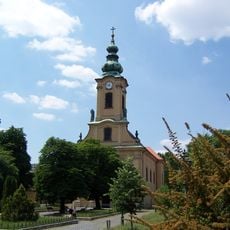
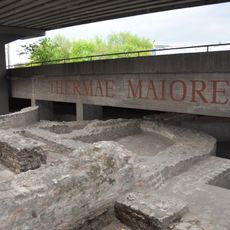
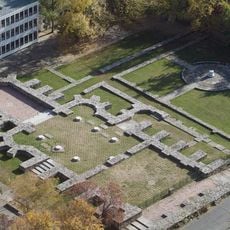
The castle remains lie under the Reformed Church on Kálvin utca in Óbuda, not on Castle Hill in Buda. Parts of the walls and the red-and-white marble gate have been excavated and can be viewed; the site is a short walk from Óbuda's Fő tér.
The castle's remains lie beneath the Reformed Church on Kálvin Street, where excavations uncovered the lower part of a gate built of red and white marble, and traces of Roman-style underfloor heating. The medieval town's seals from the late 14th century probably show this castle.
The community of curious travelers
AroundUs brings together thousands of curated places, local tips, and hidden gems, enriched daily by 93,070 contributors worldwide.