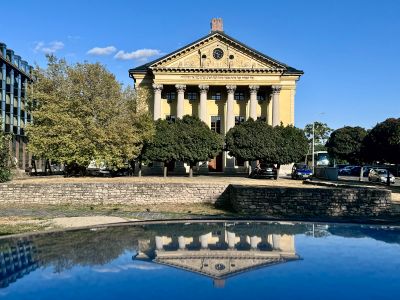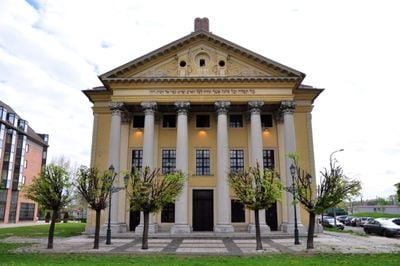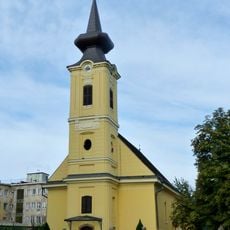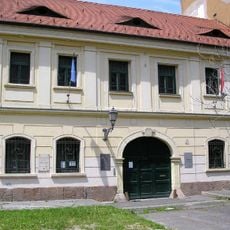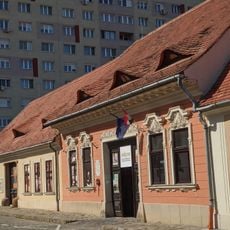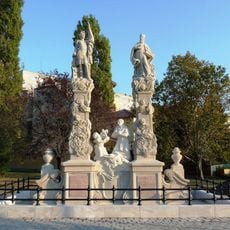
Óbuda Synagogue, Greek Revival synagogue in Óbuda district, Hungary.
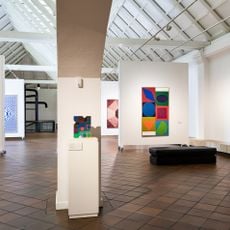
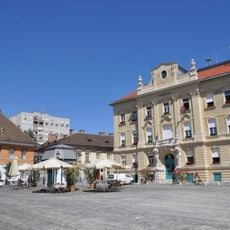
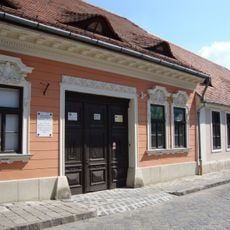
Óbuda Synagogue is a Greek Revival building with columns and pediments that define its main facade. The interior shows a clear layout with distinct areas for worshippers and central religious objects positioned within the prayer space.
The building was inaugurated in 1821 during a period when Hungary's Jewish population gained more social and religious freedoms. This era allowed for the construction of dedicated houses of worship in urban neighborhoods.
The interior contains traditional Jewish elements like the Torah shrine and reading platform that organize the prayer space. These features reflect the religious practices that have been maintained here since the building's early days.
The building is accessible by public transportation and located in a central neighborhood with pedestrian-friendly streets. Visitors should check ahead to see if tours are available, as access may be limited at times.
An 1822 Austro-Hungarian guidebook called it the "most magnificent" new building in Óbuda and judged that only Amsterdam's Portuguese Synagogue surpassed it in grandiosity. Its copper roof was requisitioned during World War I and melted for munitions.
The community of curious travelers
AroundUs brings together thousands of curated places, local tips, and hidden gems, enriched daily by 94,092 contributors worldwide.